Home > Fasteners > Anchors > Anchor Bolts

Anchor Bolts for Foundation and Structural Applications

Anchor bolts are cast-in-place fasteners embedded in concrete for foundation, structural steel and equipment anchorage applications, including J-bolts, L-bolts, straight anchor rods, bent anchor bolts and custom anchor bolts made to drawing. This representative category page helps buyers review anchor bolts sourcing information before sending an RFQ.

Anchor Bolt Category Reference

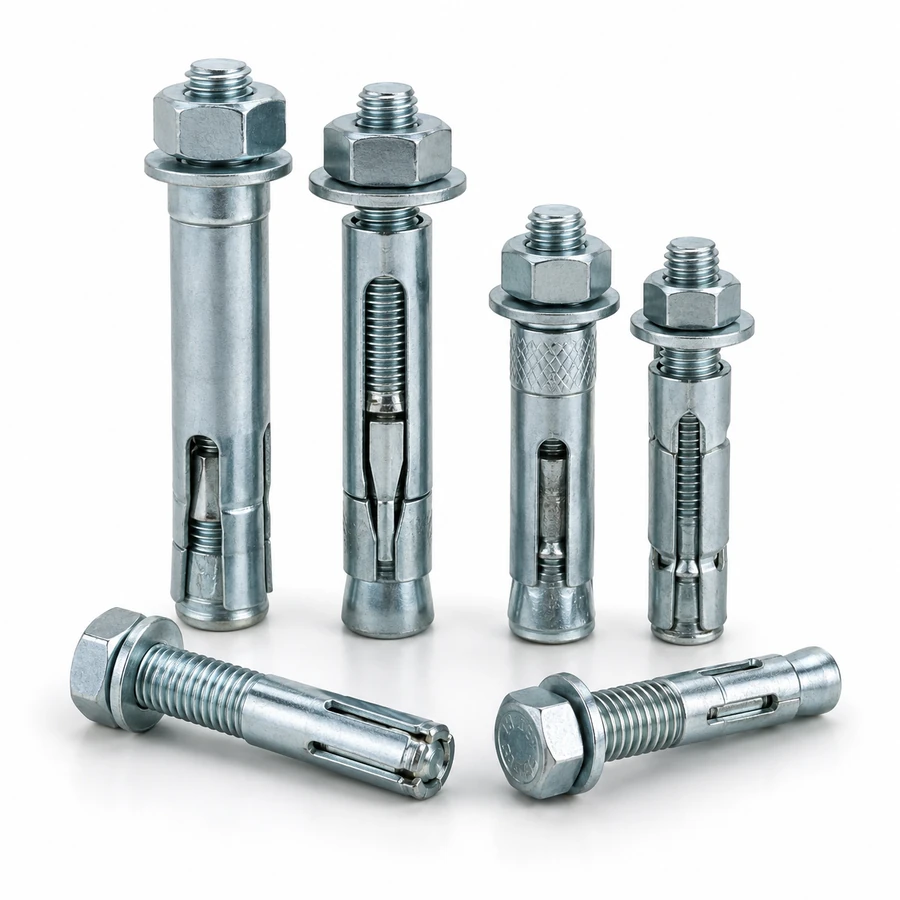
Anchor bolts are cast-in-place foundation fasteners, typically in J, L, straight or bent configurations. They are set into wet concrete before it cures, relying on the embedded shape and concrete bond for anchorage. Anchor bolts differ fundamentally from post-installed mechanical anchors. They are not interchangeable with wedge anchors, sleeve anchors, drop-in anchors, stud bolts or threaded rods. Product images are representative category references only. Final specifications should be confirmed by buyer drawings, foundation plans, structural project specifications, samples or purchase lists.

Cast-in anchor bolts, J-bolts, L-bolts and straight anchor rods for foundation applications

Product images are representative category references only. Final specifications should be confirmed by buyer drawings, foundation plans or structural project specifications.

Direct Answer for Buyers

Anchor bolts are cast-in-place fasteners embedded in concrete for structural foundation and anchorage applications. Common types include J-bolts, L-bolts, straight anchor rods, bent anchor bolts, headed anchor bolts, hook bolts and custom anchor bolts made to drawing. Anchor bolts may also be referred to as foundation bolts or concrete foundation anchors in project documentation. Anchor bolts cannot be specified by diameter alone — they require complete specifications including type, standard or drawing, unit system, thread, bend geometry, embedment length, projection, material, grade and matching components. Buyers cannot specify simply "anchor bolt" or a product photo, because anchor bolts differ from the following products:

  • Wedge anchors — post-installed mechanical expansion anchors with a wedge clip and nut; different installation method (set into hardened concrete)
  • Sleeve anchors — post-installed mechanical expansion anchors with sleeve expansion; different mechanism and installation
  • Drop-in anchors — post-installed female, internally threaded flush-mount anchors set with a setting tool
  • Chemical anchor systems — adhesive-based anchors bonded to the substrate; different holding principle
  • Anchor rods — straight threaded rods used with adhesive or cast-in applications but installation and purpose differ per project
  • Stud bolts — headless threaded fasteners with threading on both ends, used between flanges; not foundation anchors
  • Fully threaded rods — continuous-thread fasteners for bracing, hanger or mechanical assembly; not cast-in foundation anchors

Anchor bolts are cast-in-place and structurally designed for the specific foundation or application. They are not automatically interchangeable with any post-installed anchor type. To prepare an anchor bolt RFQ, buyers should confirm at least:

  • Anchor bolt type (J, L, straight, bent, headed, custom)
  • Standard or drawing number
  • Metric or inch unit system
  • Thread diameter
  • Thread pitch or TPI
  • Overall length
  • Threaded length
  • Plain shank length
  • Bend geometry (type, radius, hook length, leg dimensions)
  • Embedment length
  • Projection above concrete
  • Template or base plate details
  • Material
  • Grade
  • Surface finish
  • Matching nut standard and grade
  • Matching washer requirements
  • Quantity by SKU
  • Packing and thread protection
  • Inspection documents
  • Drawing, BOM or structural project specification

Prices, MOQ, packing, documentation, and lead time are confirmed after manual RFQ review.

Final specifications should be confirmed according to the buyer's drawing, BOM, foundation plan, structural project specification, installation conditions or RFQ requirements.

Structural anchor design and installation requirements must be confirmed by the buyer's qualified engineer.

Anchor Bolt Types and Applications

Use this table as a starting point for RFQ preparation. Different anchor bolt types serve different foundation and structural connection applications and are not interchangeable solely because the diameter appears similar.

Anchor Bolt TypeTypical ConfigurationTypical ApplicationRFQ Detail to Confirm
J-boltsJ-shaped bend at embedded endFoundation anchorage, column base plates, equipment mountingJ-bend dimensions, hook length, thread, embedment, material, grade
L-boltsL-shaped bend at embedded endFoundation anchorage, wall connections, light structural supportsL-leg length, bend radius, thread, embedment, material, grade
Straight anchor rodsStraight with threaded ends (single or double)Foundation anchorage, base plate connections per structural specOverall length, threaded length, thread, embedment, material, grade
Bent anchor boltsCustom bend per drawingNon-standard foundation configurations per buyer drawingBend geometry, dimensions, thread, material, grade per drawing
Headed anchor boltsHex head or square head at embedded endEmbedded head anchorage per structural specificationHead dimensions, thread, head type, material, grade
Hook boltsHook bend at embedded endSuspension, hanging or tie-down per project specificationHook dimensions, thread, embedment, material, grade
Foundation boltsPer standard or drawingGeneral foundation and structural anchorageStandard, dimensions, thread, embedment, material, grade
Metric anchor boltsPer ISO or DIN standardApplications specifying metric dimensions and thread systemStandard, metric thread size, pitch, material, grade, embedment
Inch anchor boltsPer ASTM or ASME standardApplications specifying inch dimensions and thread systemStandard, inch thread size, TPI, material, grade, embedment
Custom anchor bolts made to drawingPer buyer drawingNon-standard dimensions, bend geometry, material or gradeDrawing, dimensions, bend geometry, material, finish, grade

Important: Anchor bolts are cast-in-place foundation fasteners. They are not post-installed mechanical anchors. Wedge anchors, sleeve anchors and drop-in anchors are not interchangeable with anchor bolts. Product images are for identification reference only.

Common Standards and Drawing References

These standards and drawing references are commonly used in buyer RFQs and project documents. They are not final compliance statements. Standard versions, full scope and exact requirements should be confirmed during manual RFQ review. Final material, grade, dimensions, thread, bend geometry and project requirements are subject to confirmation during manual RFQ review.

ReferenceCommon ScopeTypical RFQ UseImportant Limitation
ASTM F1554Carbon and alloy steel anchor bolts for structural applications — covers straight anchor bolts in Grade 36, 55 and 105Subject to confirmation during manual RFQ review — confirm grade, thread and dimensions per project specASTM F1554 covers straight anchor bolts. J-bolts, L-bolts and custom bends may require a buyer drawing. Standard version and scope per project.
ASTM A307Carbon steel bolts and studs — Grade A for general applicationsSubject to confirmation during manual RFQ review — confirm applicability for anchor bolt typeASTM A307 is a general bolt standard. Confirm whether it is accepted for the specific anchor bolt application and project specification.
DIN 529Foundation bolts (round or square head) — commonly referenced in metric applicationsSubject to confirmation during manual RFQ review — confirm DIN version and scopeDIN 529 covers specific foundation bolt configurations. Not all anchor bolt types are covered by DIN 529.
Buyer drawing, foundation plan or structural project specificationProject-specific anchor bolt type, dimensions, bend geometry, material, grade and connection detailsSubject to confirmation during manual RFQ review — per buyer drawing or BOMAll non-standard dimensions, bend configurations and requirements must be confirmed against the buyer's drawing. Structural design by qualified engineer.
ASME B1.1Unified inch screw threads (UNC, UNF, 8UN) — commonly referenced for inch-thread anchor boltsSubject to confirmation during manual RFQ review — confirm thread class and seriesThread system must match the anchor bolt specification. Metric and inch threads are not interchangeable.

Important: Standards, drawings and specifications are project-specific. No standard or drawing can be assumed automatically applicable across all anchor bolt types, sizes or foundation conditions. Final material, grade, thread, bend geometry and project requirements must be confirmed during manual RFQ review.

Thread, Dimensions and Embedment Considerations

Anchor bolt thread, dimensions and embedment parameters must be confirmed per the applicable standard, drawing or project specification. The following parameters should be reviewed during RFQ preparation.

  • Thread diameter (metric or inch as specified)
  • Thread pitch (metric) or threads per inch (inch)
  • Thread series (UNC, UNF, 8UN for inch; coarse or fine for metric)
  • Thread class (e.g. 2A for external threads per ASME B1.1)
  • Thread length at the exposed end
  • Thread length at the embedded end (if double-ended)
  • Overall length (from end to end including bends)
  • Threaded length (length of threading on each end)
  • Plain shank length (unthreaded portion between threads)
  • Bend type (J, L, hook, custom per drawing)
  • Bend radius (inner or centerline)
  • Hook length (for J-bolts — straight length after bend)
  • Leg dimensions (for L-bolts — horizontal leg length)
  • Embedment length (depth of anchor in concrete)
  • Projection above concrete (exposed length for nut and washer connection)
  • Template or base plate hole pattern
  • Hole size through fixture or base plate
  • Square or flushness requirement for projection

Materials, Grades and Mechanical Considerations

Common materials, grades and mechanical requirements for anchor bolts are listed below. Material and grade selection depends on the structural design, service environment and project specification.

SpecificationMaterial / GradeTypical ApplicationRFQ Note
ASTM F1554 Grade 36Carbon steel, 36 ksi minimum yieldGeneral structural foundation anchorageGrade 36 is weldable; confirm for specific application
ASTM F1554 Grade 55Carbon steel, 55 ksi minimum yieldHigher-strength structural anchorageConfirm availability for diameter and bend type
ASTM F1554 Grade 105Alloy steel, 105 ksi minimum yieldHigh-strength structural anchorageHeat treated; confirm bend capability and availability
ASTM A307 Grade ACarbon steel bolt gradeGeneral-purpose non-structural or light anchor applicationsConfirm if accepted per structural project spec
Stainless steel A2 (304)Corrosion-resistant austenitic stainlessGeneral corrosion-resistant anchor bolt applicationsConfirm mechanical properties per project spec
Stainless steel A4 (316)Higher-corrosion-resistance austenitic stainlessMarine, coastal or high-corrosion environmentsConfirm mechanical properties per project spec
Custom per buyer drawingPer buyer material specificationNon-standard material or grade requirementsConfirm material certs and mechanical test docs

Important: Material grade must meet the structural design requirements of the project. No fixed load, yield or tensile value should be assumed without project-specific and product-specific confirmation. Structural design and installation requirements must be confirmed by the buyer's qualified engineer.

Surface Finish Directions

Common surface finishes for anchor bolts are listed below. Finish selection depends on the service environment, embedment condition and project specification. No fixed corrosion resistance, salt spray hours or service life should be assumed without project-specific confirmation.

FinishTypical ApplicationRFQ Note
Plain (black)Cast-in applications where embedded portion does not require additional corrosion protection per project specConfirm whether plain finish is acceptable per the structural project specification for the exposed portion
Zinc plated (clear, yellow)Limited corrosion protection for indoor or mild environment applicationsConfirm coating thickness and thread fit after coating
Hot-dip galvanized (HDG)Outdoor, corrosive or high-humidity environments per project specificationConfirm coating thickness per ASTM or applicable standard; confirm thread class after galvanizing (may require oversize tapping)
Mechanical galvanizedCorrosion protection per project specificationConfirm thread fit after coating
Other coating per specProject-specific coating requirements (epoxy, Dacromet, etc.)Confirm coating type, thickness and thread fit per project specification

Concrete, Template and Installation Considerations

Anchor bolts are cast into wet concrete and must be positioned precisely before pouring. The following installation and template considerations should be reviewed during RFQ preparation. Structural anchor design and installation requirements must be confirmed by the buyer's qualified engineer.

  • Concrete compressive strength per structural design
  • Concrete aggregate size and reinforcement spacing
  • Embedment length per structural design
  • Projection tolerance above concrete surface
  • Template or jig for anchor bolt positioning
  • Base plate or fixture hole pattern
  • Anchor bolt setting tolerance (horizontal and vertical)
  • Plumbness and alignment requirement
  • Leveling nut arrangement (if applicable)
  • Grouting requirement after bolt setting
  • Edge distance per structural design
  • Anchor bolt spacing per structural design
  • Foundation reinforcement clearance
  • Thread protection during concrete pour
  • Post-pour thread cleaning and inspection
  • Installation temperature and curing conditions

Matching Nuts, Washers and Assembly Requirements

Anchor bolts require matching nuts, washers and in some cases additional components per the applicable standard or project specification. These components must be specified in the RFQ.

  • Nut standard (ASTM A563, ASTM A194, ISO 4032, DIN 934)
  • Nut grade (must match anchor bolt grade per project spec)
  • Nut thread system and class (metric or inch)
  • Double nut requirement (for leveling or locking)
  • Heavy hex nut requirement (per structural connection)
  • Flat washer standard (ASTM F436, DIN 125, ISO 7089)
  • Flat washer dimensions (OD, ID, thickness per standard)
  • Hardened washer requirement
  • Leveling nut and washer assembly
  • Base plate or template hole size
  • Washer face condition (flat, chamfered per standard)
  • Finish match (nut and washer finish to match anchor bolt)

Packing, Identification and Traceability

Anchor bolt packing and traceability requirements depend on quantity, size, bend type, destination, transport mode and buyer requirements. The following factors should be reviewed during RFQ preparation.

  • Quantity by SKU
  • Bundle count and weight
  • Thread protection method (plastic caps, wraps, or coating)
  • Bundle strapping and banding
  • Label requirement (product name, size, quantity, batch number, project name)
  • Batch or heat identification marking
  • Carton/pallet marking for destination
  • Packing list with dimensions and quantities
  • Rust prevention for exposed threads
  • Export packing per buyer instruction
  • Inspection documents (dimensional report, MTC, coating report)
  • Pre-shipment photo or video requirement
  • Custom packing per buyer drawing or specification
  • Project-specific identification or color coding

Anchor Bolts RFQ Checklist

Include as many of the following items as applicable in your RFQ to ensure a complete and reviewable sourcing request.

  • Anchor bolt type
  • Standard or drawing number
  • Metric or inch unit system
  • Thread diameter
  • Thread pitch or threads per inch
  • Thread series (UNC, UNF, 8UN, metric coarse, metric fine)
  • Overall length
  • Threaded length (exposed end)
  • Threaded length (embedded end if double-ended)
  • Plain shank length
  • Bend type (J, L, hook, straight, custom)
  • Bend radius
  • Hook length (J-bolt)
  • Leg dimensions (L-bolt)
  • Embedment length
  • Projection above concrete
  • Template or base plate details
  • Hole size through base plate or fixture
  • Concrete or foundation application detail
  • Material
  • Grade
  • Yield and tensile strength requirement
  • Surface finish
  • Matching nut standard and grade
  • Matching washer requirements
  • Quantity by SKU
  • Packing
  • Thread protection
  • Bundle weight
  • Labels
  • Batch or heat identification
  • Inspection documents
  • Third-party inspection requirement
  • Destination
  • Drawing, BOM or structural project specification
  • Original buyer specification before conversion (if referencing metric or inch)

Common Procurement Mistakes

  1. Confusing anchor bolts (cast-in-place) with wedge anchors (post-installed mechanical expansion)
  2. Confusing anchor bolts with sleeve anchors (post-installed expansion with sleeve)
  3. Confusing anchor bolts with drop-in anchors (female flush-mount post-installed anchors)
  4. Assuming anchor bolts are interchangeable with chemical anchor systems
  5. Confusing anchor bolts with stud bolts (headless thread-ended fasteners for flange connections)
  6. Assuming anchor bolts are interchangeable with fully threaded rods
  7. Confusing anchor bolts with anchor rods without confirming the specific product and project specification
  8. Specifying only diameter without confirming thread system (metric or inch)
  9. Specifying only diameter without confirming thread pitch or TPI
  10. Omitting bend type and geometry from the RFQ
  11. Assuming a standard (e.g. ASTM F1554) automatically covers all anchor bolt types including J-bolts and L-bolts
  12. Ignoring the need for a structural drawing or foundation plan to confirm dimensions
  13. Assuming metric and inch anchor bolts are interchangeable with simple dimensional conversion
  14. Selecting material grade without confirming structural design requirements
  15. Omitting matching nut and washer requirements in the RFQ
  16. Assuming all anchor bolts carry product-specific test reports or ICC-ES/ETA evaluations
  17. Overlooking thread protection and packing requirements for threaded portions
  18. Assuming embedment depth without structural engineering confirmation
  19. Omitting template or base plate hole pattern information
  20. Placing orders based on a catalogue description without confirming actual thread system and bend geometry
  21. Assuming lead time without confirming material, coating, bend fabrication and packing requirements
  22. Assuming website information constitutes sufficient structural engineering data

Product-Level FAQ

What is an anchor bolt and how does it differ from a wedge anchor or sleeve anchor?

An anchor bolt is a cast-in-place fastener embedded in wet concrete before it sets, typically in J, L, straight or bent configurations. Wedge anchors and sleeve anchors are post-installed mechanical expansion anchors installed into hardened concrete. Anchor bolts rely on the cured concrete surrounding the embedded shape for anchorage. Wedge and sleeve anchors rely on mechanical expansion against the hole wall. These products are not interchangeable. Base material, installation conditions and project requirements differ fundamentally.

Are anchor bolts the same as anchor rods or stud bolts?

No. Anchor bolts are cast-in-place foundation fasteners, typically with a bent configuration (J or L) or straight with an embedded head. Anchor rods are straight threaded rods used with adhesive, anchored plates or in cast-in applications but require project-specific confirmation. Stud bolts are headless threaded fasteners with threading on both ends, used between flanges. These products are not interchangeable based on diameter or length alone.

Are anchor bolts interchangeable with fully threaded rods?

No. Anchor bolts are cast-in-place, often have specific bends (J or L), embedded projections and matching nut/washer configurations per a foundation plan or structural specification. Fully threaded rods are straight, continuous-thread fasteners used in mechanical assembly, bracing or hanger applications. These products serve different purposes and cannot be interchanged without engineering review.

What base materials are anchor bolts used with?

Anchor bolts are cast into concrete foundations, footings, piers, walls and slabs. Base material is wet concrete at the time of installation. The embedment length, concrete strength, reinforcement spacing, edge distance and anchor spacing must be designed by a qualified engineer per the project structural specification.

What types of anchor bolts are commonly specified?

Common anchor bolt types include J-bolts, L-bolts, straight anchor rods with head or threaded end, bent anchor bolts, hook bolts, foundation bolts, headed anchor bolts and custom anchor bolts made to a buyer drawing. The specific type depends on the foundation plan, structural project specification and connection detail.

What materials and grades are commonly specified for anchor bolts?

Common materials and grades include ASTM F1554 Grade 36, Grade 55 and Grade 105 for structural steel anchor bolts, ASTM A307 Grade A for general-purpose bolts, stainless steel A2/304 or A4/316 for corrosion-resistant applications, and custom grades per buyer drawing or project specification. Material grade must meet the project structural design requirements confirmed by a qualified engineer.

What thread system is used for anchor bolts?

Anchor bolts can be specified in metric thread systems (M thread per ISO or DIN) or inch thread systems (UNC, UNF, 8UN series per ASME B1.1). Metric and inch anchor bolts are not interchangeable. The thread system, thread diameter, pitch or TPI must be confirmed in the RFQ and matched to the applicable standard or drawing.

What are common standards for anchor bolts?

Commonly referenced standards include ASTM F1554 for steel anchor bolts, ASTM A307 for carbon steel bolts, DIN 529 for foundation bolts, and buyer drawings or foundation plans. These standards are commonly referenced in RFQs. They are not final compliance statements. Standard versions, full scope and exact requirements should be confirmed during manual RFQ review.

Does ASTM F1554 cover all anchor bolt types?

ASTM F1554 covers straight anchor bolts in specified grades. J-bolts, L-bolts, bent anchors and custom shapes may require a buyer drawing or project specification in addition to or instead of ASTM F1554. The applicable standard or drawing depends on the anchor bolt type, material, grade and project requirements.

What information is needed to specify an anchor bolt?

Anchor bolt specification requires anchor type, standard or drawing number, metric or inch unit system, thread diameter, thread pitch or TPI, overall length, threaded length, plain shank length, bend type and dimensions, embedment length, projection above concrete, template or base plate details, material and grade, surface finish, matching nut and washer requirements, quantity by SKU and packing requirements.

Can load capacity be assumed from anchor bolt diameter alone?

No. Load capacity depends on anchor bolt type, diameter, material grade, embedment length, concrete strength, edge distance, anchor spacing, reinforcement, installation quality and the applicable structural design. No fixed load value should be assumed without project-specific engineering confirmation.

Do all anchor bolts carry product-specific test reports?

No. Product-specific test reports or evaluations are product-specific, size-specific and project-specific. Buyers should confirm during manual RFQ review whether specific test documentation or material test certificates are required for their project.

What matching components are required with anchor bolts?

Anchor bolts typically require matching nuts (sometimes double nuts), flat washers and in some cases leveling nuts, base plates or templates. The nut standard, grade, thread system and finish must match the anchor bolt specification. Washer dimensions (OD, ID, thickness) should be confirmed per the applicable standard or project specification.

What surface finishes are available for anchor bolts?

Common finishes include plain (black) for cast-in applications where the embedded portion does not require corrosion protection, zinc plated for limited corrosion protection, hot-dip galvanized (HDG) for outdoor or corrosive environments, and other specified coatings per project specification or buyer drawing. No fixed corrosion resistance or service life should be assumed without project-specific confirmation.

Can anchor bolts be used in seismic applications?

Seismic suitability depends on the specific anchor bolt type, material, grade, embedment, base conditions and applicable building code or project specification. No fixed seismic performance should be assumed without project-specific and product-specific confirmation by a qualified engineer.

Can website content substitute for structural engineering design or foundation verification?

No. Website content cannot substitute for structural engineering design, foundation plans, valid test reports or field installation verification. Structural anchor design and installation requirements must be confirmed by the buyer's qualified engineer.

Can you review an anchor bolt RFQ that uses inch dimensions and convert it to metric references?

Yes. Reference dimensional conversions can be provided, but metric and inch anchor bolts are not automatically interchangeable. The original thread system, pitch or TPI, dimensions, bend geometry, grade, matching components and applicable project specification must remain part of the RFQ review. See our Metric and Inch Fastener Conversion Guide for reference.

Related Sourcing Links

Send Anchor Bolt RFQ for Manual Review

Request a manual review of your anchor bolt requirements. Include anchor bolt type, standard or drawing number, metric or inch unit system, thread dimensions, bend geometry, embedment length, projection, material, grade, finish, matching components, quantity and project specification in your RFQ.

Prices, MOQ, packing, documentation, and lead time are confirmed after manual RFQ review.

Final lead time is confirmed after RFQ review.

Final specifications should be confirmed according to the buyer's drawing, BOM, foundation plan, structural project specification, installation conditions or RFQ requirements.

Structural anchor design and installation requirements must be confirmed by the buyer's qualified engineer.

Review Anchor Bolts RFQ