
Hex Nuts and Nut-Type Fasteners
Nuts should be specified by standard, thread size, pitch, nut style, property class or ASTM grade reference, material, finish, quantity, packing, inspection documents, and matching bolt or stud requirements before RFQ review. This page supports manual sourcing communication and does not publish stock promises, public price tables, capacity claims, certification claims, or pre-confirmed delivery dates.
Direct Answer for Buyers
For a nut RFQ, buyers should first confirm whether the item follows DIN 934, ISO 4032, DIN 985, DIN 6923, ASTM A563, or a buyer drawing. Hex nuts, heavy hex nuts, lock nuts, nylon insert lock nuts, and flange nuts should be listed as separate SKUs when the styles, dimensions, materials, or finishes differ.
Nuts are often sourced together with matching hex bolts, studs, threaded rods, flat washers, spring washers, hardened washers, cartons, pallets, inspection documents, and coating requirements. Prices, MOQ, delivery lead time, packing details, and documentation are confirmed after manual RFQ review.
Final specifications should be confirmed according to the buyer's drawing, BOM, project standard, or RFQ requirements.
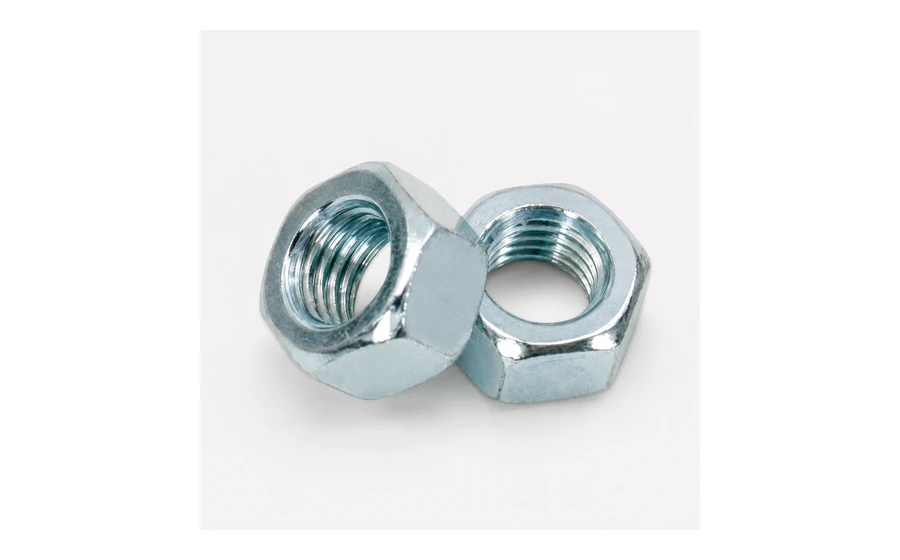
Product images are representative category references only. Final specifications should be confirmed by buyer drawings, standards, samples, or purchase lists.
Buyer Quick Answers
Short answers for commonly asked nut sourcing questions.
1. What is a hex nut?
A hex nut is a six-sided internally threaded fastener normally used with a mating bolt, stud, or threaded rod to clamp or secure components. Hex nuts are specified by standard, thread size, pitch, nut style, property class, material, and finish.
2. What is the difference between DIN 934 and ISO 4032?
DIN 934 and ISO 4032 are both metric hex nut standards. ISO 4032 has different across-flat dimensions for some sizes and tighter tolerances. Buyers should confirm the applicable standard, dimensions, tolerance, and project acceptance before substitution.
3. What is the difference between a hex nut and a lock nut?
A standard hex nut provides basic thread engagement. A lock nut incorporates a prevailing-torque element such as a nylon insert (DIN 985) or an all-metal deformed thread (DIN 980) to resist loosening under vibration. Buyers should confirm the lock nut type, reuse expectation, and temperature range.
4. What is the difference between a hex nut and a flange nut?
A hex nut is a standard six-sided nut. A flange nut (DIN 6923) has an integrated washer flange that distributes load over a wider area and may include serrations on the bearing surface. The choice depends on joint design, base material, and clamping requirements.
5. Can metric and inch nuts be substituted?
No. Metric and inch nuts are not automatically interchangeable. The thread system, diameter, pitch or TPI, dimensions, and tolerance differ between the two systems. Buyers should confirm the original specification. See the Metric and Inch Fastener Conversion Guide for reference.
6. What do nut property classes mean?
Metric nut property classes (Class 6, 8, 10, 12 per ISO 898-2) indicate proof load levels for mating bolts. Class 8 nuts are commonly paired with Class 8.8 bolts, Class 10 with 10.9 bolts, and Class 12 with 12.9 bolts. Inch nut grades follow ASTM A563 references (e.g. Grade A, C, DH). Final selection should be confirmed per the applicable standard.
7. What is the difference between Class 8 and Class 10 nuts?
Metric Class 8 nuts have lower proof load than Class 10 nuts. Class 8 nuts are commonly paired with Class 8.8 bolts for general machinery and construction, while Class 10 nuts are paired with Class 10.9 bolts where higher strength is specified. Buyers should confirm the matching bolt or stud specifications and coating requirements.
8. How to match nuts with bolts and washers?
Nut class should generally match the mating bolt or stud grade. Washer hardness must be suitable for the application. Coating compatibility between the nut, bolt, and washer should be confirmed. Matching recommendations should follow the buyer drawing, BOM, or project standard.
9. What information is needed for a nut RFQ?
A complete nut RFQ should include nut style, standard or drawing reference, metric or inch unit system, thread size and pitch, property class or ASTM grade, material, surface finish, quantity, packing, inspection document requirements, and matching bolt or stud specifications.
10. Can nuts be included in mixed fastener orders?
Yes. Mixed orders can be reviewed when each SKU has a clear nut style, standard, size, grade, finish, quantity, and packing requirement. Nuts in mixed orders should be listed separately from bolts, studs, washers, and other items with distinct specification requirements.
11. How to source nuts from China?
Buyers can submit a drawing, BOM, or itemised RFQ with standards, dimensions, grades, finishes, quantities and packing requirements. Prices, MOQ, packing, documentation and lead time are confirmed after manual RFQ review.
12. What affects nut procurement lead time?
Lead time depends on nut type, grade, material, finish, quantity, packing requirements, inspection documents, and whether the order includes multiple standards or custom items. Final lead time is confirmed after RFQ review.
Common Standards Reference
Use this table to organize RFQ language before confirming drawings, BOM notes, or project standards.
| Standard | Common Product Type | Typical RFQ Focus | Buyer Note |
|---|---|---|---|
| DIN 934 | Metric hex nut | Thread size, pitch, class, finish, and mating bolt or stud. | Often compared with ISO 4032; confirm project acceptance before substitution. |
| ISO 4032 | Metric hex nut | Metric nut dimensions, thread tolerance, property class, and finish. | Confirm whether the buyer needs ISO reference or accepts DIN wording. |
| DIN 985 | Nylon insert lock nut | Nylon insert type, temperature expectation, reuse expectation, and thread fit. | Confirm application environment before selecting nylon insert lock nuts. |
| DIN 6923 | Flange nut | Flange style, serration requirement, thread size, class, material, and finish. | Confirm if serrated or non-serrated flange nuts are required. |
| ASTM A563 | Inch heavy hex or hex nut reference | Grade reference, thread series, coating, marking, and matching structural bolts or rods. | Confirm grade and project standard before RFQ review. |
| Buyer drawing | Custom or special nut item | Drawing dimensions, material, finish, tolerance, packing, and inspection documents. | Use drawings, samples, or BOM notes as the main specification source. |
Final specifications should be confirmed according to the buyer's drawing, BOM, project standard, or RFQ requirements.
Mechanical Properties, Grades, and Materials
Nut class or grade should be reviewed with the mating bolt, stud, or threaded rod rather than selected by appearance alone.
| Grade / Class | Common Materials | Typical Use | Buyer Confirmation Note |
|---|---|---|---|
| Metric Class 6 | Carbon steel | General low to moderate duty fastening where specified. | Confirm mating bolt class and application load. |
| Metric Class 8 | Carbon steel or medium-carbon steel | Common pairing for Class 8.8 bolts in machinery and construction assemblies. | Confirm class marking, finish, and thread tolerance. |
| Metric Class 10 | Medium-carbon or alloy steel | Higher-strength assemblies where project standards require stronger nuts. | Review coating choice and matching bolt grade. |
| Metric Class 12 | Alloy steel | High-strength applications where the buyer standard specifies Class 12. | Confirm engineering acceptance and inspection document needs. |
| ASTM Grade A / C / DH references | Carbon steel or alloy steel, standard-dependent | Structural, anchor rod, or inch-size fastening projects. | Confirm ASTM reference, markings, coating, and matching bolt or rod standard. |
| Stainless 304 / 316 | A2/304 or A4/316 stainless steel | Corrosion-resistant assemblies where stainless material is specified. | Confirm exact stainless grade and mating part material. |
| Brass where applicable | Brass | Electrical, decorative, or corrosion-sensitive uses where the buyer specifies brass. | Confirm material grade, dimensions, and application requirement. |
Final specifications should be confirmed according to the buyer's drawing, BOM, project standard, or RFQ requirements.
Surface Finish Directions
Surface treatment should be specified by application environment, coating build-up, thread fit, mating part finish, and document needs.
| Finish | Common Use | RFQ Detail to Confirm | Buyer Note |
|---|---|---|---|
| Zinc plated | General indoor or light outdoor fastening. | Clear, blue, yellow, or other appearance; coating thickness if required. | Check thread fit and color requirement before production review. |
| Hot-dip galvanized | Outdoor construction, structural, or anchor assemblies. | Coating standard, oversize tapping, mating bolt finish, and thread fit after coating. | Do not assume zinc plated and HDG nuts are interchangeable. |
| Black oxide | Indoor, tool, or appearance-driven assemblies. | Oil protection, packing, and corrosion expectation. | Not a substitute for corrosion-resistant coating. |
| Plain | Dry indoor assembly or parts requiring later treatment. | Oiling, rust prevention, packaging, and storage condition. | Clarify whether plain finish is acceptable for shipment and storage. |
| Stainless | Corrosion-resistant assemblies where material itself is specified. | 304, 316, A2, A4, passivation, and matching part material. | Confirm exact stainless grade instead of using only the word stainless. |
| Zinc flake | Automotive, machinery, or higher corrosion requirement projects. | Coating system, color, salt spray requirement, and document needs. | Confirm acceptance standard and mating part compatibility. |
Final specifications should be confirmed according to the buyer's drawing, BOM, project standard, or RFQ requirements.
Nuts RFQ Checklist
- Nut style: hex nut, heavy hex nut, lock nut, nylon insert lock nut, flange nut, or drawing-based item
- Standard or drawing reference
- Metric or inch unit system
- Thread size and pitch
- Original buyer specification before conversion
- Nut height, across-flat dimension, or special dimension where required
- Metric class or ASTM grade reference
- Material: carbon steel, alloy steel, stainless 304/316, brass where applicable
- Surface finish and coating thickness where required
- Mating bolt, stud, or threaded rod details
- Quantity by SKU
- Packing, label, carton weight, and pallet requirements
- Inspection document requirement
- Destination country, port, or shipment plan
Common Procurement Mistakes
- Matching nuts only by nominal thread diameter.
- Ignoring thread pitch, thread tolerance, or coating build-up.
- Using DIN 934 and ISO 4032 interchangeably without buyer approval.
- Selecting zinc plated nuts when hot-dip galvanized mating parts require thread-fit review.
- Pairing a nut class with a bolt grade without checking project requirements.
- Using lock nuts without confirming temperature, vibration, or reuse expectations.
- Treating product photos as final specifications.
Final specifications should be confirmed according to the buyer's drawing, BOM, project standard, or RFQ requirements.
Nuts FAQ
Short answers for buyers preparing technical RFQs.
What is the difference between DIN 934 and ISO 4032?
DIN 934 and ISO 4032 are both common metric hex nut references, but buyers should confirm dimensions, tolerance, thread details, markings, and project acceptance before treating one as a substitute for the other.
What is the difference between a hex nut and a heavy hex nut?
A heavy hex nut generally has larger across-flat dimensions and is often used for structural or higher-load applications. Buyers should confirm the applicable standard, mating bolt or stud, grade, and project requirement.
How should nut class be matched with bolt grade?
Nut class should be selected according to the mating bolt or stud grade, application load, thread engagement, material, finish, and project standard. Metric Class 8 nuts are often paired with Class 8.8 bolts, but final matching should follow the buyer drawing, BOM, project standard, or RFQ requirement.
How should buyers choose between zinc plated and hot-dip galvanized nuts?
Zinc plating is often used for lighter corrosion requirements, while hot-dip galvanizing is common for outdoor or construction use. Buyers should confirm coating thickness, thread fit after coating, mating part finish, and inspection requirements.
Can nuts be ordered with matching bolts and washers?
Yes. Nuts can be reviewed together with matching bolts, studs, threaded rods, flat washers, spring washers, or hardened washers when the RFQ clearly lists each SKU, standard, size, grade, finish, quantity, and packing requirement.
What is the typical lead time for a mixed nut order from China?
Lead time depends on grade, finish, quantity, and packing requirements. Final lead time is confirmed after RFQ review.
Can you review an RFQ that uses inch dimensions and convert it to metric references?
Yes. Reference conversions can be provided, but metric and inch products are not automatically interchangeable. The original thread system, pitch or TPI, dimensions, grade, matching components and applicable standard must remain part of the RFQ review.
What is a hex nut?
A hex nut is a six-sided internally threaded fastener normally used with a mating bolt, stud, or threaded rod to clamp or secure components. Hex nuts are specified by standard, thread size, pitch, nut style, property class, material, and finish.
What is the difference between a hex nut and a lock nut?
A standard hex nut provides basic thread engagement without added locking features. A lock nut incorporates a prevailing-torque element such as a nylon insert (DIN 985) or an all-metal deformed thread (DIN 980) to resist loosening under vibration. Buyers should confirm the lock nut type, reuse expectation, and temperature range.
What is the difference between a hex nut and a flange nut?
A hex nut is a standard six-sided nut. A flange nut (DIN 6923) has an integrated circular washer flange that distributes clamping load over a wider area and may include serrations on the bearing surface. The choice depends on joint design, base material, and clamping requirements.
What do nut property classes mean?
Metric nut property classes (e.g. Class 6, 8, 10, 12 per ISO 898-2) indicate proof load levels for mating bolts. Class 8 nuts are commonly paired with Class 8.8 bolts, Class 10 with 10.9 bolts, and Class 12 with 12.9 bolts. Inch nut grades follow ASTM A563 references (e.g. Grade A, C, DH). Final selection should be confirmed per the applicable standard and engineering requirements.
What is the difference between Class 8 and Class 10 nuts?
Metric Class 8 nuts have lower proof load than Class 10 nuts. Class 8 nuts are commonly paired with Class 8.8 bolts for general machinery and construction, while Class 10 nuts are paired with Class 10.9 bolts where higher strength is specified. Buyers should confirm the matching bolt or stud specifications and coating requirements.
Can metric and inch nuts be substituted?
No. Metric and inch nuts are not automatically interchangeable. The thread system, diameter, pitch or TPI, dimensions, and tolerance differ between the two systems. Buyers should confirm the original specification. See the Metric and Inch Fastener Conversion Guide for reference.
What is the difference between carbon steel and stainless steel nuts?
Carbon steel and stainless steel nuts differ in mechanical properties, corrosion behaviour and applicable material grades. Carbon steel nuts are commonly selected for general-purpose fastening, while stainless steel nuts may be chosen where corrosion resistance is needed. Buyers should confirm the specific material grade (e.g. A2/304 or A4/316).
What information is required for a nut RFQ?
A complete nut RFQ should include nut style, standard or drawing, thread size and pitch, metric class or ASTM grade, material and finish, quantity and packing requirements, matching bolt or stud specifications, and inspection document requirements.
How can buyers source nuts from China?
Buyers can submit a drawing, BOM, or itemised RFQ with standards, dimensions, grades, finishes, quantities and packing requirements. Prices, MOQ, packing, documentation and lead time are confirmed after manual RFQ review.
Final specifications should be confirmed according to the buyer's drawing, BOM, project standard, or RFQ requirements.
Related Sourcing Links
Use these pages with the nut reference when preparing a buyer RFQ or mixed fastener list.
Send Nut RFQ for Manual Review
Send your product list, drawings, standards, quantities, finish requirements, matching bolt or washer requirements, and packing expectations to xyan060816@gmail.com.
Send RFQEmail: xyan060816@gmail.com