Fastener product knowledge

Threaded Rods

Threaded rods from China are commonly sourced for support, hanger, bracing, tie, anchor and general industrial fastening applications where continuous threads along the entire length are required. Common types include fully threaded rods, threaded bars, metric threaded rods, UNC threaded rods, UNF threaded rods, 8UN threaded rods, cut-to-length threaded rods, stainless steel threaded rods, hot-dip galvanized threaded rods, and custom threaded rods made to specification. Buyers should confirm product type, standard or drawing, metric or inch system, diameter, thread series, thread pitch or TPI, overall length, cut length tolerance, thread tolerance, straightness requirement, end condition, chamfer, burr removal, material, property class or grade, surface finish, coating specification, matching nut requirements, packing, thread protection, inspection documents, and destination before quotation. These references are commonly found in buyer RFQs, drawings and sourcing documents. They are not final compliance statements. Subject to confirmation during manual RFQ review. We support sourcing communication for threaded rods, mixed SKU fastener orders, threaded rod specification review, and Hebei / Yongnian fastener cluster sourcing. Prices, MOQ, delivery lead time, packing details, and inspection documents are confirmed after manual RFQ review. Product images are representative only; final specifications should be confirmed by buyer drawings, standards, samples, or purchase lists.

Threaded Rod Category Reference

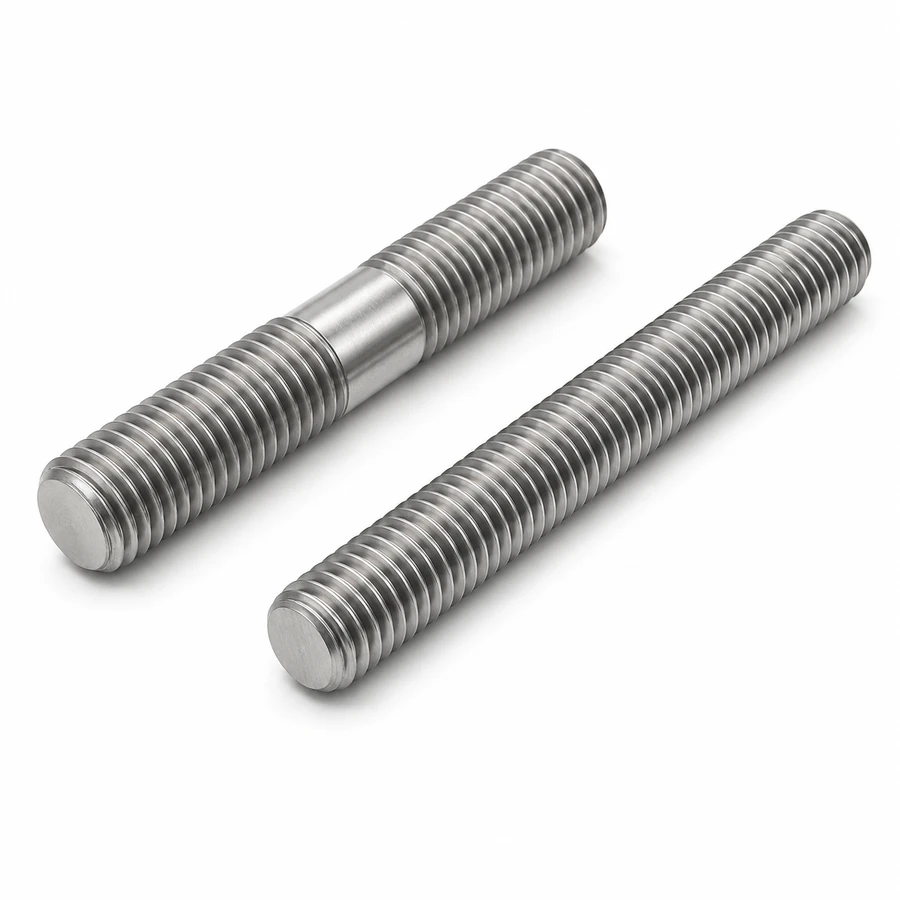
Threaded rods are used across support systems, hanger assemblies, bracing structures, tie applications, threaded bar connections, and general industrial fastening applications. Threaded rods have continuous threads along their entire length. They are not interchangeable with stud bolts, double-end studs, anchor rods, or headed bolts. Product images are representative category references only. Final specifications should be confirmed by buyer drawings, standards, samples, or purchase lists.

Fully threaded rods in metric and inch thread systems, multiple materials and finishes

Product images are representative category references only. Final specifications should be confirmed by buyer drawings, standards, samples, or purchase lists.

Direct Answer for Buyers

Buyers cannot specify only "threaded rod", a single diameter and length, or a product photo, because threaded rods differ from the following products:

  • Stud bolts — may have threaded ends only with a plain center section depending on the applicable standard
  • Double-end studs — threaded sections at the ends with a plain center shank; not fully threaded
  • Tap-end studs — may have different thread lengths, pitches or fits at each end; not fully threaded
  • Anchor rods — used with adhesive or cast-in-place for structural anchoring; may have head, bend or embedment configurations
  • Headed bolts — have a formed head at one end; different tightening mechanism and assembly method

Threaded rods have continuous threads along the entire length. They cannot be specified by diameter and length alone. The buyer must also confirm thread series (metric, UNC, UNF, 8UN or other), pitch or TPI, thread tolerance, cut-end condition, chamfer, straightness, material, grade and finish. Metric, UNC, UNF and 8UN threads are not interchangeable. Coating thickness may affect thread fit and nut run-on, particularly for hot-dip galvanized rods. Longer rods require review of straightness, bending, packing and thread protection. No fixed strength, load capacity, torque, temperature or pressure data should be assumed without project-specific documentation.

To prepare a threaded rod RFQ, buyers should confirm at least:

  • Product type
  • Metric or inch system
  • Original buyer specification before conversion
  • Diameter
  • Thread series
  • Thread pitch or TPI
  • Overall length
  • Cut length tolerance
  • Thread tolerance
  • End condition
  • Chamfer
  • Burr removal
  • Straightness requirement
  • Material
  • Property class or grade
  • Surface finish
  • Coating requirement
  • Matching nut standard and grade
  • Washer requirement
  • Quantity by SKU
  • Packing
  • Thread protection
  • Inspection documents
  • Destination

Prices, MOQ, packing, documentation, and lead time are confirmed after manual RFQ review.

Final specifications should be confirmed according to the buyer's drawing, BOM, applicable standard, sample, assembly conditions, or RFQ requirements.

Final lead time is confirmed after RFQ review.

Threaded Rod Types and Applications

Use this table as a starting point for RFQ preparation. Different threaded rod types serve different applications and are not interchangeable solely because the diameter appears similar.

Rod TypeThread ConfigurationTypical ApplicationRFQ Detail to Confirm
Fully threaded rodsContinuous threads along entire lengthSupport, hanger, bracing, tie and general fastening applicationsStandard, diameter, thread series, pitch or TPI, length, grade, finish
Metric threaded rodsMetric coarse or fine thread per applicable standardApplications specifying metric dimensions and thread seriesStandard, metric diameter, pitch, length, grade, finish
UNC threaded rodsUnified National Coarse thread seriesApplications specifying inch dimensions with UNC threadStandard, inch diameter, TPI, length, grade, finish
UNF threaded rodsUnified National Fine thread seriesApplications specifying inch dimensions with UNF threadStandard, inch diameter, TPI, length, grade, finish
8UN threaded rodsUnified National 8-Thread series (8 TPI, typically larger diameters)Large-diameter applications requiring 8-thread series per applicable standardStandard, inch diameter, thread series, length, grade, finish
Cut-to-length threaded rodsContinuous threads, cut to specified length with end finishingProjects requiring specific lengths with cut-end finishingStandard, diameter, thread series, length, tolerance, end condition, chamfer
Stainless steel threaded rodsMetric or inch thread per applicable standardCorrosion-resistant applicationsStandard, stainless grade, diameter, pitch or TPI, length, grade, finish
Hot-dip galvanized threaded rodsMetric or inch thread, galvanized after threadingOutdoor or corrosive environmentsStandard, diameter, pitch or TPI, length, coating thickness, thread allowance, nut oversize
Custom threaded rods made to specificationPer buyer drawing, BOM or specificationNon-standard diameter, length, thread, material, grade or finishDrawing, BOM, all dimensions, thread specs, material, finish, tolerance

Important: Threaded rods are not the same as stud bolts, double-end studs, tap-end studs, anchor rods or headed bolts. Two threaded rods with the same diameter and length may have different thread series, pitches or tolerances and are not interchangeable. Product images are for identification reference only.

Common Standards and Drawing References

These standards are commonly referenced in buyer RFQs and sourcing documents. They are not final compliance statements. Subject to confirmation during manual RFQ review. Where a standard cannot be confirmed, the buyer's drawing, BOM or project specification takes precedence.

ReferenceCommon ScopeTypical RFQ UseImportant Note
DIN 976Dimensions and specifications for threaded rods — commonly referenced in buyer RFQsSubject to confirmation during manual RFQ review — confirm the applicable type and dimension rangeConfirm the specific standard edition and type per the buyer's requirement. Different DIN editions are not automatically identical.
ISO 898-1Mechanical properties of carbon steel fasteners — commonly referenced for property classesSubject to confirmation during manual RFQ review — confirm the applicable property class and testing requirementsMechanical property requirements should be confirmed per the applicable standard and buyer's project specification.
ISO 3506-1Mechanical properties of stainless steel fasteners — commonly referenced for property classesSubject to confirmation during manual RFQ review — confirm the applicable stainless grade and property classConfirm the specific stainless steel grade and property class per the buyer's requirement.
ASTM A193 / A193MAlloy steel and stainless steel bolting for high-temperature or high-pressure serviceSubject to confirmation during manual RFQ review — confirm the applicable grade, condition and testingDifferent ASTM A193 grades are not automatically equivalent. Confirm the specific grade per the buyer's requirement.
ASTM A320 / A320MAlloy steel bolting for low-temperature serviceSubject to confirmation during manual RFQ review — confirm the applicable grade, condition and testingConfirm the specific grade and impact test requirements per the buyer's specification.
ASTM A307Carbon steel bolts and studs — commonly referenced for general applicationsSubject to confirmation during manual RFQ review — confirm the applicable gradeConfirm the specific requirement (Grade A or Grade B) per the buyer's project specification.
ASTM F1554Anchor bolts (steel) — applicable only when threaded rods are used as anchor bolts per project specificationSubject to confirmation during manual RFQ review — confirm the applicable grade and embedment requirementsASTM F1554 applies to anchor bolts, not general-purpose threaded rods. Confirm the specific application per the buyer's drawing or project specification.
Buyer drawing or BOMAll dimensions, thread configuration, material, finish and acceptance criteria — per buyer drawing or BOMSubject to confirmation during manual RFQ review — per buyer drawing, BOM or project specificationWhere a standard cannot be confirmed, the buyer's drawing, BOM or project specification takes precedence.

Important: No fixed strength, load capacity, torque, temperature or pressure data should be assumed from a standard reference alone. Different standards are not automatically identical. The final specification should be confirmed according to the buyer's drawing, BOM, applicable standard, sample, assembly conditions, or RFQ requirements.

Metric, UNC, UNF and 8UN Thread Considerations

Thread series selection is one of the most critical parameters for threaded rods. The following thread series are commonly specified in buyer RFQs. They are not interchangeable.

Thread SeriesStandard ReferenceThread DefinitionInterchangeability
Metric coarseISO metric thread per applicable standardPitch defined in millimeters (e.g. M10 x 1.5)Not interchangeable with metric fine or any inch thread series
Metric fineISO metric thread per applicable standardFiner pitch than metric coarse for same diameter (e.g. M10 x 1.25)Not interchangeable with metric coarse or any inch thread series
UNC (Unified National Coarse)ASME B1.1Coarse thread series, TPI defined per diameterNot interchangeable with UNF, 8UN or any metric thread series
UNF (Unified National Fine)ASME B1.1Fine thread series, TPI defined per diameterNot interchangeable with UNC, 8UN or any metric thread series
8UN (Unified National 8-Thread)ASME B1.18 threads per inch, typically for larger diameters (1 in and above)Not interchangeable with UNC, UNF or any metric thread series

Key considerations:

  1. Metric, UNC, UNF and 8UN thread series are not interchangeable. The thread series must be confirmed per the applicable standard, drawing or BOM.
  2. Diameter conversion between metric and inch is for reference only and does not represent product equivalence. A 10 mm diameter rod is not equivalent to a 3/8 in rod.
  3. If the RFQ specifies inch dimensions, the buyer should confirm whether UNC, UNF or 8UN thread is required. These cannot be assumed from the diameter alone.
  4. The original thread system, pitch or TPI must remain part of the RFQ review. Reference conversion does not create product equivalence.
  5. For metric threads, confirm whether coarse or fine pitch applies for the specified diameter.
  6. For inch threads, confirm the specific thread series and TPI per the applicable standard or drawing.

For thread series conversion references, see our Metric and Inch Fastener Conversion Guide.

Dimensions, Length and Cut-End Requirements

Threaded rods are typically supplied in standard lengths or cut to length per buyer specification. Dimensional specifications must be reviewed together with the applicable drawing, standard or BOM.

  • Overall length
  • Cut length tolerance
  • Thread tolerance class
  • End condition (as-cut, chamfered, deburred, rethreaded)
  • Chamfer specification
  • Burr removal requirement
  • Thread runout allowance at ends
  • Straightness requirement
  • Length measurement method (measured under tension or free state)
  • Squareness of cut ends

Key considerations:

  1. Cut length tolerance must be specified. Standard commercial tolerances may not be acceptable for precision applications.
  2. Cut ends may have partially deformed threads. Depending on the application, rethreading or chamfering of cut ends may be required.
  3. Burr removal at cut ends should be specified if the application requires clean ends for nut run-on.
  4. Thread runout at the ends of the rod should be within the tolerance specified by the applicable standard.
  5. Length, thread and cut-end specifications must not be confirmed from a product photo alone.

Materials and Mechanical Considerations

Material and property class selection depends on the service environment, load requirements, temperature conditions and project specification. The following materials and grades are commonly referenced in buyer RFQs.

MaterialProperty Class / GradeCommon ApplicationRFQ Detail to Confirm
Carbon steel4.8, 5.8, 8.8General threaded rod applicationsStandard, diameter, thread series, property class, finish
Carbon steel, high tensile10.9Higher strength applications per buyer specificationStandard, diameter, thread series, property class, heat treatment, finish
Low-carbon steelPer ASTM A307 or buyer specificationGeneral applications per ASTM or buyer specificationStandard, grade, diameter, thread series, finish
Alloy steelPer ASTM A193 / A320 or buyer specificationHigh-temperature or low-temperature service per buyer specificationStandard, grade, diameter, heat treatment, testing requirements
Stainless steel A2 / 304A2-70, A2-80General corrosion-resistant applicationsStandard, diameter, thread series, grade, finish
Stainless steel A4 / 316A4-70, A4-80Higher corrosion resistance applicationsStandard, diameter, thread series, grade, finish
Non-standard or buyer-specified materialPer buyer drawing or BOMSpecial material or mechanical requirementsDrawing, material specification, mechanical property requirements

Important: No fixed strength, load capacity, torque, temperature range or pressure rating should be assumed without project-specific documentation. Material and property class should be reviewed together with the applicable standard, service conditions and nut compatibility. The final specification should be confirmed according to the buyer's drawing, BOM, or applicable standard.

Surface Finish Directions

Finish selection depends on the service environment, thread tolerance, matching nut requirements and project specification. The following finishes are commonly referenced in buyer RFQs.

FinishCommon ApplicationRFQ Detail to Confirm
Plain / as-manufactured (oiled)General indoor or protected applicationsSurface condition, oil type if specified, storage duration
Zinc plated (clear, yellow, blue)General corrosion resistance per buyer specificationCoating thickness, plated thread fit, nut run-on allowance
Phosphate (manganese or zinc)Threaded rods requiring base coating or oil retentionCoating type, coating weight, application environment
Hot-dip galvanizedOutdoor or corrosive environments per buyer specificationCoating thickness, thread size allowance after galvanizing, nut oversize tapping
Dacromet / Geomet / other zinc-flake coatingCorrosion-resistant applications with controlled thread fitCoating type, thickness, thread allowance, application environment
Buyer-specified coatingNon-standard finish per drawing or project specificationDrawing, coating specification, thread fit requirement

Important: Coating thickness may affect thread fit, pitch diameter and nut run-on. Hot-dip galvanized threaded rods may require oversize tapping for nuts. Coating requirements must be reviewed together with the thread tolerance and matching nut requirements. No fixed corrosion resistance or service life should be assumed without project-specific confirmation. The final specification should be confirmed according to the buyer's drawing, BOM, or applicable standard.

Matching Nuts, Washers and Assembly Considerations

Threaded rods typically engage with nuts at both ends and may use washers under the nuts. The nut and washer specifications must be compatible with the threaded rod configuration.

  • Nut standard and grade
  • Nut thread size and series
  • Nut material (matching or superior to rod)
  • Nut finish (matching or compatible with rod)
  • Washer type and dimensions
  • Washer material and finish
  • Lock washer or flat washer requirement
  • Assembly torque requirement
  • Lubrication requirement
  • Preload or tension requirement
  • Locking or prevailing torque requirement
  • Nut and rod marking requirement
  • Custom nut per buyer drawing

Key considerations:

  1. Nut material and strength must be compatible with the threaded rod property class.
  2. Coating on the threaded rod may require oversize tapping for nuts, especially for hot-dip galvanized rods.
  3. Washer dimensions must match the rod diameter and nut bearing surface.
  4. Assembly torque and preload should be confirmed per engineering documentation.
  5. No fixed torque, preload or tension value should be assumed without project-specific documentation.

Packing, Straightness and Thread Protection

Long threaded rods require careful attention to straightness, packing and thread protection during transport and storage. These requirements should be specified in the RFQ.

  • Straightness requirement per applicable standard or drawing
  • Thread protector type and location
  • Bundle or bulk packing
  • Packing quantity per bundle
  • Bundle weight
  • Carton or wooden case packing for shorter rods
  • Layer separation within carton
  • Pallet requirement
  • Strapping and wrapping
  • Rust prevention (oil, VCI paper, VCI bag)
  • Label requirement
  • Batch or heat identification marking
  • Export packing per buyer instruction
  • Custom packing per drawing or BOM

Key considerations:

  1. Long threaded rods (typically 1 m or longer) require straightness review. Straightness tolerance should be specified per the applicable standard or buyer drawing.
  2. Thread protectors should be specified for both ends to prevent thread damage during transport.
  3. Long rods may bend during transport if not properly supported and packed.
  4. Bundle packing may cause thread damage if rods rub against each other without separation.
  5. Rust prevention is critical for plain (uncoated) rods, especially for export shipments with long transit times.
  6. Packing method depends on length, diameter, destination, transport mode and buyer requirements.

Threaded Rods RFQ Checklist

Use this checklist to prepare a complete threaded rod RFQ. Incomplete specifications may lead to incorrect quotation or production delays.

  • Product type
  • Standard or drawing
  • Metric or inch system
  • Diameter
  • Thread series
  • Pitch or TPI
  • Overall length
  • Cut length tolerance
  • Thread tolerance
  • Straightness requirement
  • End condition
  • Chamfer
  • Burr removal
  • Material
  • Property class or ASTM grade
  • Stainless steel grade
  • Surface finish
  • Coating requirement
  • Matching nut standard and grade
  • Washer requirement
  • Application
  • Quantity by SKU
  • Bundle or carton weight
  • Wooden case or pallet
  • Thread protection
  • Rust prevention
  • Labels
  • Batch or heat identification
  • Inspection documents
  • Destination
  • Original buyer specification before conversion
  • Drawing, BOM or project specification

Prices, MOQ, packing, documentation, and lead time are confirmed after manual RFQ review.

Final specifications should be confirmed according to the buyer's drawing, BOM, applicable standard, original unit system, sample, or RFQ requirements.

Final lead time is confirmed after RFQ review.

Common Procurement Mistakes

The following mistakes are frequently observed in buyer RFQs for threaded rods. Avoiding them reduces quotation delays and specification mismatches.

  1. Specifying only "threaded rod" without clarifying the product type, thread series or applicable standard.
  2. Assuming all fully threaded rods are the same when metric, UNC, UNF and 8UN have different thread configurations.
  3. Ordering by diameter and length alone without specifying the thread series, pitch or TPI.
  4. Assuming metric diameter conversion to inch creates an equivalent or interchangeable product.
  5. Failing to specify whether the rod is metric coarse, metric fine, UNC, UNF or 8UN thread.
  6. Assuming UNC and UNF threaded rods of the same diameter are interchangeable.
  7. Ordering a threaded rod when the application requires a double-end stud, stud bolt, anchor rod or headed bolt.
  8. Ordering a threaded rod as a substitute for a stud bolt without reviewing the applicable standard.
  9. Assuming threaded rods can replace anchor rods without reviewing embedment and structural requirements.
  10. Providing only a photo as the product specification without dimensions, thread details or tolerances.
  11. Assuming the supplier will select the correct thread series without explicit instruction.
  12. Failing to specify cut length tolerance, which may result in rods that do not fit the assembly.
  13. Not specifying burr removal or chamfer at cut ends, causing assembly difficulties with nuts.
  14. Assuming no straightness requirement, which may lead to bent rods that fail inspection or assembly.
  15. Ordering hot-dip galvanized rods without specifying oversize tapping requirements for nuts.
  16. Failing to confirm that coating thickness may affect thread fit and nut run-on.
  17. Ordering long rods without specifying thread protection, leading to damaged threads during transport.
  18. Assuming standard packing is adequate for long rods without confirming bundle weight or layer separation.
  19. Not specifying rust prevention for plain rods, particularly for export shipments.
  20. Requesting ASTM F1554 threaded rods without confirming whether the rod is used as an anchor bolt.
  21. Assuming that a DIN standard and an ISO standard for the same nominal dimension are automatically equivalent.
  22. Failing to confirm the specific stainless steel grade (e.g. A2 vs A4, 304 vs 316) for corrosion-resistant rods.

FAQ

What is the difference between a threaded rod and a stud bolt?

A threaded rod is typically fully threaded along its entire length. A stud bolt may have threaded ends only or may also be fully threaded, depending on the applicable standard. They are not automatically interchangeable. Buyers should confirm the specific product type per their drawing or BOM.

What is the difference between a threaded rod and a double-end stud?

A threaded rod has continuous threads along its entire length. A double-end stud has threaded sections at the ends with a plain center section between them. They serve different applications and are not interchangeable. Buyers should confirm the product type per their drawing or standard.

What is the difference between a threaded rod and an anchor rod?

Threaded rods are general-purpose rods with continuous threads. Anchor rods are typically used with adhesive or cast-in-place for structural anchoring applications and may have specific head, bend or embedment configurations. They serve different applications and are not interchangeable. Buyers should confirm the product type per their drawing or project specification.

What is the difference between a threaded rod and a headed bolt?

A threaded rod has no head and is threaded along its entire length. A headed bolt has a formed head at one end with a threaded section at the other. They use different tightening mechanisms and assembly methods. They are not interchangeable. Buyers should confirm the product type per their drawing or application.

Can a threaded rod be specified by diameter and overall length alone?

No. A threaded rod cannot be specified by diameter and overall length alone. The buyer must also specify thread series (metric, UNC, UNF, 8UN or other), thread pitch or TPI, thread tolerance, overall length tolerance, cut-end condition, chamfer and burr removal, straightness requirement, material, grade, surface finish, and applicable standard or drawing. Two threaded rods with the same diameter and length may have different thread series, pitches or tolerances and are not interchangeable.

What thread series are available for threaded rods?

Threaded rods are available in metric coarse and fine thread series, UNC (Unified National Coarse), UNF (Unified National Fine) and 8UN (Unified National 8-Thread) series, as well as other non-standard thread series per buyer specification. The thread series must be confirmed per the applicable standard, drawing or BOM. Metric, UNC, UNF and 8UN threads are not interchangeable.

What is the difference between metric, UNC, UNF and 8UN threaded rods?

Metric threaded rods use metric thread pitch in millimeters. UNC threaded rods follow Unified National Coarse thread per inch. UNF threaded rods follow Unified National Fine thread per inch. 8UN threaded rods follow the Unified National 8-Thread standard (8 threads per inch, typically for larger diameters). These thread series are not interchangeable. Diameter conversion between metric and inch is for reference only and does not represent product equivalence.

Can metric and inch threaded rods be used interchangeably?

No. Metric and inch threaded rods are not interchangeable. Different thread pitches, profiles and tolerances make direct substitution impractical. Diameter conversion between metric and inch is for reference only and does not represent product equivalence. The original thread system, pitch or TPI, and applicable standard must remain part of the RFQ review.

What information should buyers provide for a threaded rod RFQ?

Buyers should provide product type, standard or drawing, metric or inch system, diameter, thread series, thread pitch or TPI, overall length, cut length tolerance, thread tolerance, straightness requirement, end condition, chamfer, burr removal, material, property class or ASTM grade, surface finish, coating specification, matching nut requirements, washer requirements, application, quantity by SKU, packing, thread protection, rust prevention, labels, batch or heat identification, inspection documents, and destination.

Can threaded rods be cut to length?

Yes. Threaded rods can be cut to length per buyer specification. The buyer should specify overall length, cut length tolerance, end condition, chamfer and burr removal requirements. Cut ends may require rethreading or chamfering depending on the application. The cutting method and end finishing should be confirmed during manual RFQ review.

What materials are commonly used for threaded rods?

Common materials include carbon steel in property classes 4.8, 5.8, 8.8 and 10.9, stainless steel in A2-70, A2-80, A4-70 and A4-80, and grades per ASTM A193, A320 or A307 depending on the application. Alloy steel and non-standard materials are also possible per buyer specification. The material and property class should be confirmed per the buyer's drawing, BOM, or applicable standard.

Are all threaded rods supplied with nuts?

No. Threaded rods may be ordered with or without matching nuts depending on the application and buyer requirements. If nuts are required, the nut standard, grade, material, finish and thread configuration should be specified in the RFQ.

What surface finishes are available for threaded rods?

Common finishes include plain (oiled), zinc plated, hot-dip galvanized, phosphate (manganese or zinc), Dacromet, Geomet and other coatings per buyer specification. The finish selection depends on the service environment, thread tolerance and nut compatibility. No fixed corrosion resistance rating should be assumed without project-specific confirmation.

Does coating affect thread fit on threaded rods?

Yes. Coating thickness may affect thread fit, pitch diameter and nut run-on. Coating requirements must be reviewed together with the thread tolerance and matching nut requirements. Hot-dip galvanized threaded rods may require oversize tapping for nuts. The final specification should be confirmed according to the buyer's drawing, BOM, or applicable standard.

What is the maximum length available for threaded rods?

The maximum length depends on diameter, material, thread series, production equipment, straightness requirements and transport limitations. Longer rods require careful review of straightness, bending during transport, packing and thread protection. The maximum available length should be confirmed during manual RFQ review for each specific requirement.

Can you review an RFQ that uses inch dimensions and convert it to metric references?

Yes. Reference conversions can be provided, but metric and inch products are not automatically interchangeable. The original thread system, pitch or TPI, dimensions, grade, matching components and applicable standard must remain part of the RFQ review. See our Metric and Inch Fastener Conversion Guide for reference.

Related Sourcing Links

Send Threaded Rod RFQ for Manual Review

Send your product list, drawings, specifications, quantities, finish requirements, and packing expectations to xyan060816@gmail.com.

Send RFQ