
Flat Washers, Spring Washers and Industrial Washers
Washers should be specified by washer type, standard, inner diameter, outer diameter, thickness, material, hardness where required, finish, quantity, packing, inspection documents, and matching bolt or nut requirements before RFQ review. This page supports manual sourcing communication for flat washers, spring washers, hardened washers, structural washers, fender washers, square washers, lock washers, and plain washers.
Direct Answer for Buyers
For a washer RFQ, buyers should first confirm whether the item follows DIN 125, ISO 7089, ISO 7090, DIN 127, DIN 9021, DIN 6796, ASTM F436, ASTM F844, or a buyer drawing. Flat washers, spring washers, fender washers, hardened washers, structural washers, square washers, lock washers, and plain washers should be listed as separate SKUs when dimensions, hardness, material, or finish differ.
Washers are often purchased with matching bolts, nuts, studs, threaded rods, cartons, pallets, coating requirements, and inspection documents. Prices, MOQ, delivery lead time, packing details, and documentation are confirmed after manual RFQ review.
Final specifications should be confirmed according to the buyer's drawing, BOM, project standard, or RFQ requirements.
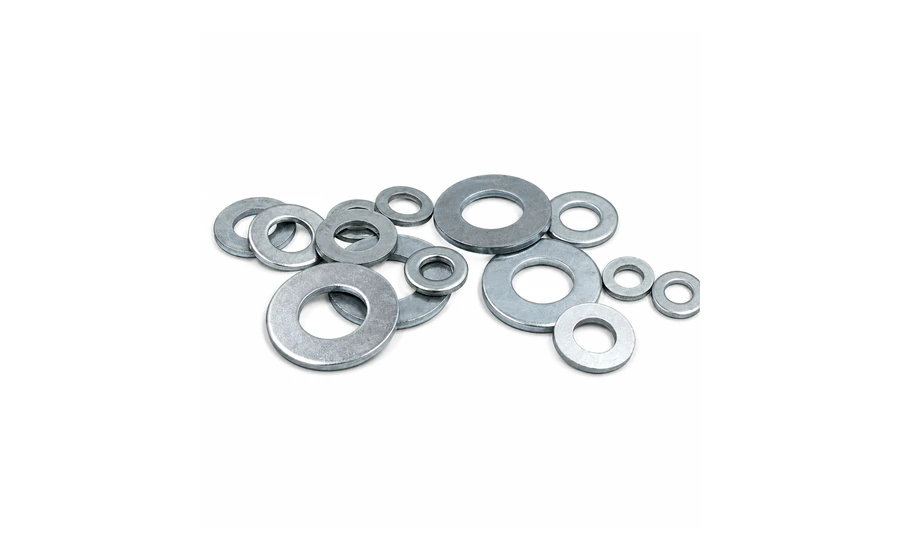
Product images are representative category references only. Final specifications should be confirmed by buyer drawings, standards, samples, or purchase lists.
Buyer Quick Answers
Short answers for commonly asked washer sourcing questions.
1. What is a flat washer?
A flat washer is a thin ring with a centre hole placed under a bolt head, nut, or screw to distribute clamping load and protect the bearing surface. Flat washers are specified by standard, inner diameter, outer diameter, thickness, material, hardness where required, and finish.
2. What is the purpose of a washer in a bolted connection?
A washer in a bolted connection primarily distributes clamping load, protects the mating surface from damage during tightening, and can reduce the effects of surface irregularities. The specific washer type, dimensions, material, and hardness should be confirmed by the applicable standard, drawing, or project requirement.
3. Flat washer vs spring washer: what is the difference?
A flat washer primarily distributes load and protects contact surfaces. Spring washers have historically been used as locking elements, but whether they provide the required resistance to loosening must be confirmed by the joint design and testing. The final washer type should follow the drawing, BOM, project standard, or RFQ requirements.
4. DIN 125 vs ISO 7089: what should buyers know?
DIN 125 and ISO 7089 are both metric flat washer references but may differ in dimensions, chamfer profile, and tolerance. Buyers should confirm the applicable standard, inner and outer diameter ranges, material, and project acceptance before treating one as a substitute for the other.
5. ASTM F436 hardened washer vs general flat washer: what is the difference?
ASTM F436/F436M covers hardened steel washers with chemical, mechanical, and dimensional requirements. DIN 125 and ISO 7089 are dimensional product standards, while F436/F436M includes additional requirements such as hardness. Any certification requirement depends on the order documents. Buyers should confirm the applicable specification, coating, bolt grade, and drawing before selection.
6. Metric washers vs inch washers: can they be interchangeable?
No. Metric and inch washers are not automatically interchangeable. The inner diameter, outer diameter, thickness, and dimensional system differ between metric and inch washer standards. Buyers should confirm the original specification. See the Metric and Inch Fastener Conversion Guide for reference.
7. How to select washer dimensions for bolts?
Washer dimensions should be selected by the applicable standard, inner diameter matching the bolt shank, and outer diameter and thickness meeting the application requirements. DIN 125 and ISO 7089 define standard series dimensions. Buyers should confirm the washer type, material, hardness, and project standard.
8. Large diameter washer vs standard washer: when to choose?
Large diameter washers can provide a wider bearing area. Whether a DIN 9021 washer is suitable for a soft or thin base material must be confirmed by the joint design, applicable specification, buyer requirement, and drawing.
9. Carbon steel washer vs stainless steel washer: what is the difference?
Carbon steel washers are commonly selected for general-purpose fastening, while stainless steel washers are typically chosen where corrosion resistance is needed. Buyers should confirm the exact material grade (e.g. A2/304 or A4/316), hardness requirement if applicable, and coating requirements before RFQ review.
10. What information is required for a washer RFQ?
A complete washer RFQ should include washer type, standard or drawing reference, inner diameter, outer diameter, thickness, material, hardness requirement if applicable, surface finish, quantity, packing requirements, matching bolt or nut specifications, and inspection document requirements.
11. Can washers be included in mixed fastener orders?
Yes. Washers can be included in mixed fastener orders when each SKU has a clear washer type, standard, dimensions, material, finish, hardness requirement if applicable, quantity, and packing requirement. Washers in mixed orders should be listed separately from bolts, nuts, and other items with distinct specifications.
12. How to source washers from China?
Buyers can submit a drawing, BOM, or itemised RFQ with washer type, standard, dimensions, material, finish, hardness requirement where needed, quantity, and packing details. Prices, MOQ, packing, documentation and lead time are confirmed after manual RFQ review.
Common Standards Reference
Use this table to organize washer RFQ language before confirming drawings, BOM notes, or project standards.
| Standard | Common Washer Type | Typical RFQ Focus | Buyer Note |
|---|---|---|---|
| DIN 125 | Metric flat washer | Inner diameter, outer diameter, thickness, material, and finish. | Confirm whether the buyer accepts DIN or needs ISO wording. |
| ISO 7089 | Normal series plain washer | Metric dimensions, washer series, material, and coating. | Often reviewed as an ISO alternative to DIN flat washer language. |
| ISO 7090 | Chamfered normal series washer | Washer profile, dimensions, material, and mating bolt requirement. | Confirm profile requirements before substitution. |
| DIN 127 | Spring lock washer | Split washer style, size, spring steel, finish, and application. | Confirm whether the project allows spring washers for the joint design. |
| DIN 9021 | Large OD / fender washer | Large outside diameter, thickness, material, and surface finish. | Useful where larger bearing surface is required. |
| DIN 6796 | Conical spring washer | Load requirement, material, finish, and washer orientation. | Review mechanical requirements and application conditions. |
| ASTM F436 | Hardened steel washer | Hardness, coating, dimensions, and structural bolt assembly matching. | Common for high-strength structural assemblies where specified. |
| ASTM F844 | General-purpose steel washer | Inch dimensions, material, finish, and packing. | Confirm inch sizing and project acceptance. |
Final specifications should be confirmed according to the buyer's drawing, BOM, project standard, or RFQ requirements.
Washer Types and Applications
Washer type should be selected by joint design, mating fastener, load distribution need, vibration expectation, and project standard.
| Washer Type | Common Application | RFQ Detail to Confirm | Buyer Note |
|---|---|---|---|
| Flat washers / plain washers | Load distribution and surface protection under bolts, screws, or nuts. | ID, OD, thickness, standard, material, finish, and quantity. | Do not quote only by bolt diameter if OD or thickness matters. |
| Spring washers | Assemblies where a buyer requests a locking or vibration-resistance function. | Standard, size, spring steel, finish, and application conditions. | Confirm if the buyer's engineering standard accepts spring washers. |
| Fender washers / large OD washers | Applications needing a larger bearing surface. | Large OD, thickness, material, finish, and packing method. | Separate from normal flat washers in the RFQ. |
| Hardened washers | High-strength bolts, structural assemblies, or controlled hardness applications. | Hardness, standard, coating, and mating bolt grade. | Check whether ASTM F436 or project-specific hardness is required. |
| Structural washers | Steel structure and high-strength bolting assemblies. | Structural standard, dimensions, hardness, coating, and documentation. | Review with matching bolt and nut standards. |
| Square washers | Timber, channel, construction, or specialty assemblies. | Side length, hole size, thickness, material, and finish. | Use drawing or BOM dimensions where possible. |
| Lock washers | Fastening assemblies where locking action is specified. | Lock washer style, material, finish, and application temperature. | Confirm lock washer type rather than using a generic name. |
Final specifications should be confirmed according to the buyer's drawing, BOM, project standard, or RFQ requirements.
Materials and Hardness / Mechanical Considerations
Washer material and hardness should match the application load, mating fastener, surface finish, and project document requirements.
| Material / Requirement | Common Use | RFQ Detail to Confirm | Buyer Note |
|---|---|---|---|
| Carbon steel | General flat washers and plain washers. | Standard, dimensions, finish, quantity, and packing weight. | Confirm corrosion requirement and carton weight limits. |
| Spring steel | Spring washers and selected lock washer designs. | Washer type, hardness or performance requirement, finish, and application. | Confirm temperature and reuse expectations if relevant. |
| Hardened steel | Hardened or structural washer applications. | Hardness range, standard, coating, inspection documents, and mating bolt grade. | Do not replace normal washers with hardened washers without buyer approval. |
| Stainless steel 304 | Corrosion-resistant washer assemblies where A2/304 is specified. | Material grade, dimensions, finish, and mating part material. | Confirm exact stainless grade rather than using only stainless. |
| Stainless steel 316 | A4/316 may be more suitable than A2/304 in some chloride-containing environments. | Material grade, medium, temperature, surface condition, crevice conditions, dimensions, and document needs. | Confirm suitability against the buyer's environmental and project requirements. |
| Brass where applicable | Electrical, decorative, or corrosion-sensitive uses specified by the buyer. | Material grade, dimensions, appearance, and packing. | Use buyer drawing or BOM notes as the main specification source. |
Final specifications should be confirmed according to the buyer's drawing, BOM, project standard, or RFQ requirements.
Surface Finish Directions
Washer finish should be reviewed with coating thickness, corrosion exposure, mating bolt and nut finish, and packing protection.
| Finish | Common Use | RFQ Detail to Confirm | Buyer Note |
|---|---|---|---|
| Zinc plated | Suitability depends on the coating system and the project's corrosion conditions. | Coating system, thickness, passivation, test requirements, material, and packing. | Confirm the project corrosion category and finish consistency with bolts and nuts. |
| Hot-dip galvanized | Outdoor construction or galvanized bolt assemblies. | Coating standard, washer dimensions after coating, and mating part finish. | Review coating build-up and matching galvanized fasteners. |
| Black oxide | Indoor, tool, or appearance-driven applications. | Oiling, rust prevention, packing, and storage condition. | Not a substitute for corrosion-resistant finish. |
| Plain / oiled | Dry indoor use or parts requiring later treatment. | Oil protection, anti-rust packing, and shipment requirement. | Clarify rust prevention expectations before RFQ review. |
| Stainless steel | Applications where corrosion resistance comes from material choice. | 304, 316, A2, A4, passivation, and mating part material. | Confirm exact stainless grade and application environment. |
| Zinc flake | Automotive, machinery, or higher corrosion requirement applications. | Coating system, color, salt spray requirement, and document needs. | Confirm whether the buyer accepts the coating system. |
| Phosphated | Friction-controlled, oiled, or selected machinery assemblies. | Phosphate type, oiling, friction expectation, and packing. | Review project standard and storage condition. |
Final specifications should be confirmed according to the buyer's drawing, BOM, project standard, or RFQ requirements.
Washers RFQ Checklist
- Washer type
- Standard
- Inner diameter
- Outer diameter
- Thickness
- Material
- Hardness requirement
- Surface finish
- Matching bolt / nut size
- Application
- Quantity
- Packing
- Inspection document requirement
- Destination country / port
- Drawing / BOM / project standard if any
Common Procurement Mistakes
- Quoting washers only by bolt diameter without ID, OD, and thickness.
- Mixing flat washers and spring washers in one unclear line item.
- Ignoring washer hardness for high-strength or structural assemblies.
- Choosing galvanized washers without checking matching bolt and nut finish.
- Underestimating carton weight for bulk washer packing.
- Using a photo instead of a standard, drawing, or BOM.
- Assuming large OD washers and normal flat washers are interchangeable.
Final specifications should be confirmed according to the buyer's drawing, BOM, project standard, or RFQ requirements.
Washers FAQ
Short answers for buyers preparing technical washer RFQs.
What is the difference between flat washers and spring washers?
Flat washers mainly help distribute load and protect contact surfaces. Spring washers have historically been used as locking elements, but whether they provide the required resistance to loosening must be confirmed by the joint design and testing. The final washer type should follow the drawing, BOM, project standard, or RFQ requirements.
How should buyers specify washer size in an RFQ?
Buyers should specify washer type, standard, inner diameter, outer diameter, thickness, material, hardness where required, finish, quantity, packing, and matching bolt or nut size.
When are hardened washers required?
Hardened washers may be required for high-strength bolt assemblies, structural connections, or applications where the project standard calls for washer hardness control. Buyers should confirm hardness, standard reference, coating, and mating bolt grade before RFQ review.
Can washers be ordered together with bolts and nuts?
Yes. Washers can be reviewed together with bolts, nuts, studs, and threaded rods when each SKU includes standard, size, material, finish, quantity, packing, and document requirements.
What surface finish should be used for outdoor washer applications?
Outdoor washer applications often require hot-dip galvanized, zinc flake, stainless steel, or another buyer-specified corrosion-resistant finish. The finish should be reviewed with the mating bolt and nut finish, coating thickness, and project requirement.
What affects the lead time for a mixed washer order from China?
Lead time depends on washer type, standard, material, finish, quantity, packing, and inspection document requirements. Final lead time is confirmed after RFQ review.
What is a flat washer?
A flat washer is a thin ring with a centre hole placed under a bolt head, nut, or screw to distribute clamping load and protect the bearing surface. Flat washers are specified by standard, inner diameter, outer diameter, thickness, material, hardness where required, and finish.
What is the purpose of a washer in a bolted connection?
A washer in a bolted connection primarily distributes clamping load, protects the mating surface from damage during tightening, and can reduce the effects of surface irregularities. The specific washer type, dimensions, material, and hardness should be confirmed by the applicable standard, drawing, or project requirement.
DIN 125 vs ISO 7089: what should buyers know?
DIN 125 and ISO 7089 are both metric flat washer references but may differ in dimensions, chamfer profile, and tolerance. Buyers should confirm the applicable standard, inner and outer diameter ranges, material, and project acceptance before treating one as a substitute for the other.
ASTM F436 hardened washer vs general flat washer: what is the difference?
ASTM F436/F436M covers hardened steel washers with chemical, mechanical, and dimensional requirements. DIN 125 and ISO 7089 are dimensional product standards, while F436/F436M includes additional requirements such as hardness. Any certification requirement depends on the order documents. Buyers should confirm the applicable specification, coating, bolt grade, and drawing before selection.
Metric washers vs inch washers: can they be interchangeable?
No. Metric and inch washers are not automatically interchangeable. The inner diameter, outer diameter, thickness, and dimensional system differ between metric and inch washer standards. Buyers should confirm the original specification. See the Metric and Inch Fastener Conversion Guide for reference.
What is the difference between carbon steel and stainless steel washers?
Carbon steel and stainless steel washers differ in mechanical properties and corrosion behaviour. Carbon steel washers are commonly selected for general-purpose fastening, while stainless steel washers are typically chosen where corrosion resistance is needed. Buyers should confirm the specific material grade (e.g. A2/304 or A4/316) and hardness requirements.
What are the different types of washers used in fastener assemblies?
Common washer types include flat washers, spring washers, hardened washers, structural washers, fender washers (large OD), square washers, and lock washers. Each type serves a different function in a bolted connection. The washer type should be specified by the applicable standard, drawing, or project RFQ requirement.
Can metric and inch washers be substituted?
No. Metric and inch washers are not automatically interchangeable. The inner diameter, outer diameter, thickness, dimensional ranges, and tolerance differ between the two systems. Buyers should confirm the original washer specification. See the Metric and Inch Fastener Conversion Guide for reference.
What information is required for a washer RFQ?
A complete washer RFQ should include washer type, standard or drawing reference, inner diameter, outer diameter, thickness, material, hardness requirement if applicable, surface finish, quantity, packing requirements, matching bolt or nut specifications, and inspection document requirements.
How can buyers source washers from China?
Buyers can submit a drawing, BOM, or itemised RFQ with washer type, standard, dimensions, material, finish, hardness requirement where needed, quantity, and packing details. Prices, MOQ, packing, documentation and lead time are confirmed after manual RFQ review.
Final specifications should be confirmed according to the buyer's drawing, BOM, project standard, or RFQ requirements.
Related Sourcing Links
Use these pages with the washer reference when preparing a buyer RFQ or mixed fastener list.
Send Washer RFQ for Manual Review
Send your washer type, standard, ID, OD, thickness, material, hardness requirement, finish, quantities, matching bolt or nut details, packing expectations, and inspection document needs to xyan060816@gmail.com.
Send RFQEmail: xyan060816@gmail.com