Fastener product knowledge

Self-Tapping Screws, Sheet Metal Screws and Thread-Forming Screws

Self-tapping screws from China are commonly sourced for assemblies where the screw forms or cuts its own thread in a pre-drilled pilot hole in the mating material. Common types include thread-forming screws, thread-cutting screws, pan head tapping screws, countersunk tapping screws, raised countersunk tapping screws, sheet metal screws, and metric and inch tapping screws. Buyers should confirm screw type, thread-forming or thread-cutting, point type, head style, drive type, applicable standard, diameter, length, thread pitch, material, hardness, surface finish, substrate material, substrate thickness and pilot-hole diameter before quotation. Standard references may include ISO 7049, ISO 7050, ISO 7051, DIN 7981, DIN 7982, DIN 7983, DIN 7971, DIN 7972, DIN 7973, ASME/ANSI inch tapping screw references and project-specific drawings. We support sourcing communication for self-tapping screws, mixed SKU fastener orders, screw specification review, and Hebei / Yongnian fastener cluster sourcing. Prices, MOQ, delivery lead time, packing details, and inspection documents are confirmed after manual RFQ review. Product images are representative only; final specifications should be confirmed by buyer drawings, standards, samples, or purchase lists.

Self-Tapping Screw Category Reference

Self-tapping screws are used across sheet metal fabrication, equipment enclosure assembly, electronics, HVAC, automotive and general industrial applications. Self-tapping screws typically rely on their own thread to form or cut a mating thread in a pre-drilled pilot hole in the specified substrate. Product images are representative category references only. Final specifications should be confirmed by buyer drawings, standards, samples, or purchase lists.

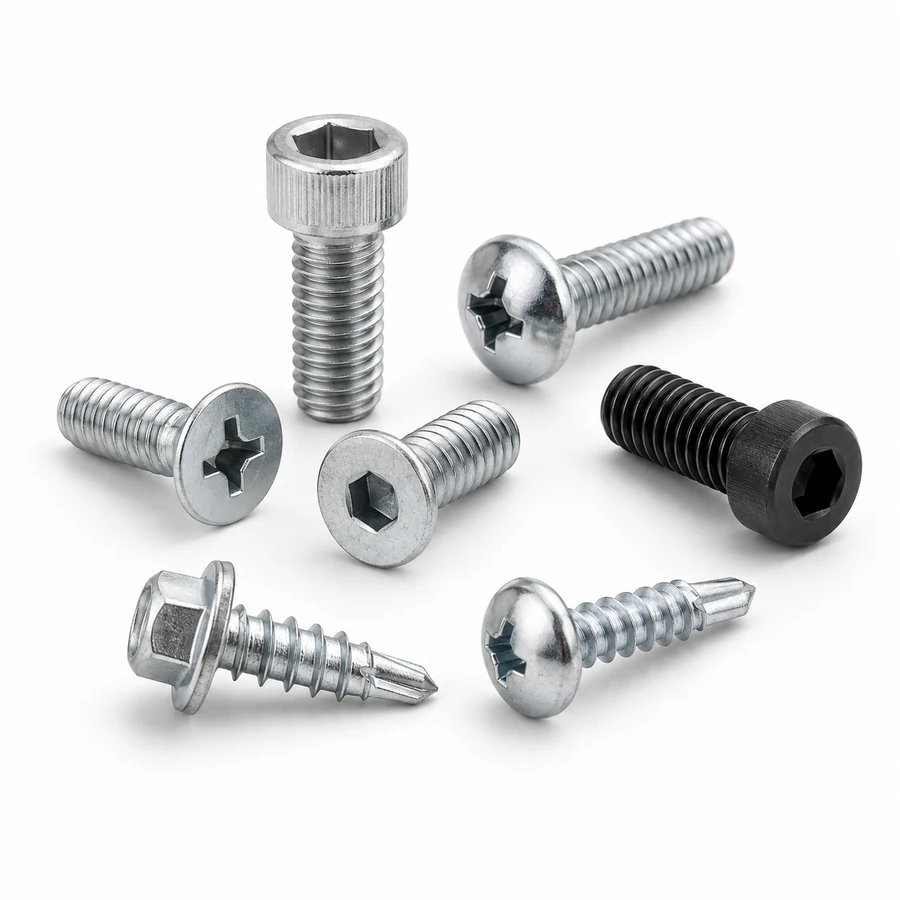
Self-tapping screws in multiple head, drive, thread and point styles

Product images are representative category references only. Final specifications should be confirmed by buyer drawings, standards, samples, or purchase lists.

Direct Answer for Buyers

Buyers cannot specify only "self-tapping screw", a single diameter, or a product photo, because self-tapping screws differ from the following products:

  • Self-drilling screws — have a drilling point that creates its own pilot hole during installation; not the same as a standard self-tapping screw and not automatically interchangeable
  • Machine screws — require a pre-tapped hole or matching nut with machine threads; do not form or cut their own thread
  • Thread-forming screws — form their own thread by displacing material without removing it; a specific subset of self-tapping screws
  • Thread-cutting screws — cut their own thread by removing material using slots or cutting features; a specific subset of self-tapping screws
  • Wood screws — specifically designed for wood with thread forms optimised for wood fibres
  • Concrete screws — specifically designed for masonry and concrete substrates with thread forms optimised for hard mineral materials

Self-tapping screws typically rely on their own thread to form or cut a mating thread in a pre-drilled pilot hole in the specified substrate. They do not require a pre-tapped hole, but they do require an appropriately sized pilot hole. The final specification depends on the buyer's drawing, applicable standard, substrate conditions and application.

To prepare a self-tapping screw RFQ, buyers should confirm at least:

  • Screw type
  • Thread-forming or thread-cutting
  • Applicable standard or drawing
  • Head style
  • Drive type
  • Point type
  • Metric or inch series
  • Diameter
  • Length
  • Thread pitch
  • Material
  • Hardness requirement
  • Surface finish
  • Substrate material
  • Substrate thickness
  • Pilot-hole diameter
  • Application
  • Quantity by SKU
  • Packing
  • Inspection documents
  • Destination

Prices, MOQ, packing, documentation, and lead time are confirmed after manual RFQ review.

Final specifications should be confirmed according to the buyer's drawing, BOM, applicable standard, sample, substrate conditions, or RFQ requirements.

Products with different thread forms, point types, head styles, diameters, lengths, materials, hardness requirements or finishes should be listed as separate SKUs.

Self-Tapping Screw Types and Applications

Use this table as a starting point for RFQ preparation. Different self-tapping screw types use different thread-forming or thread-cutting principles and are not interchangeable solely because the diameter appears similar.

Screw TypeThread PrincipleTypical ApplicationRFQ Detail to Confirm
Thread-forming screwsForms thread by displacing substrate material without removing itSheet metal, plastics and other ductile substrates where material displacement is acceptableStandard, thread form, point type, dimensions, material, hardness, substrate, pilot-hole diameter
Thread-cutting screwsCuts thread by removing substrate material via slots or cutting featuresHarder or more brittle substrates where material removal is preferredStandard, cutting slot configuration, thread form, point type, dimensions, material, hardness, substrate
Pan head tapping screwsSelf-tapping thread with pan head styleGeneral-purpose sheet metal assembly where a slightly raised head is acceptableStandard, head diameter, drive type, thread size, length, material, hardness, finish
Countersunk tapping screwsSelf-tapping thread with flat countersunk headApplications requiring a flush surface after installationStandard, head angle, drive type, thread size, length, material, hardness, finish, countersink preparation
Raised countersunk tapping screwsSelf-tapping thread with raised countersunk headApplications requiring a partially flush surface with a decorative raised headStandard, head form, drive type, thread size, length, material, hardness, finish
Sheet metal screwsSelf-tapping thread designed for sheet metal substratesSheet metal fabrication, ductwork, enclosures and panelsStandard, thread form, point type, dimensions, material, hardness, substrate thickness, pilot-hole diameter
Metric tapping screwsSelf-tapping thread in metric seriesApplications specifying metric dimensionsStandard, metric diameter, pitch, length, material, hardness, finish, substrate
Inch tapping screwsSelf-tapping thread in inch seriesApplications specifying inch dimensionsStandard, inch diameter, TPI, length, material, hardness, finish, substrate
Custom self-tapping screws made to drawingPer buyer drawing or project specificationNon-standard thread form, head style, point type or special performance requirementDrawing, BOM, thread form, material, hardness, finish, inspection requirements

Important: Self-tapping screws and self-drilling screws are not the same product type. Self-tapping screws require a pre-drilled pilot hole. Self-drilling screws have a drilling point that creates the pilot hole during installation. They are not automatically interchangeable. Product images are for identification reference only.

Common Standards Reference

These standards are commonly referenced in buyer RFQs and sourcing documents. They are not final compliance statements. Standard versions, full scope and exact requirements should be confirmed during manual RFQ review.

StandardCommon Product ScopeTypical RFQ UseImportant Limitation
ISO 7049 / DIN 7981Pan head self-tapping screws — commonly referenced in buyer RFQsSubject to confirmation during manual RFQ review — confirm head style, thread form, dimensions and materialISO and DIN references are not automatically identical in all requirements. Buyers should confirm the applicable version.
ISO 7050 / DIN 7982Countersunk flat head self-tapping screws — commonly referenced in buyer RFQsSubject to confirmation during manual RFQ review — confirm head angle, thread form and dimensionsCountersink dimensions must be confirmed per the applicable standard.
ISO 7051 / DIN 7983Raised countersunk head self-tapping screws — commonly referenced in buyer RFQsSubject to confirmation during manual RFQ review — confirm head form, thread form and dimensionsHead form differs from both pan head and flat countersunk head.
DIN 7971Pan head self-tapping screws — legacy DIN reference commonly found in buyer drawingsSubject to confirmation during manual RFQ review — confirm dimensions, thread form and materialLegacy DIN and current ISO references are not automatically identical in all details.
DIN 7972Countersunk self-tapping screws — legacy DIN reference commonly found in buyer drawingsSubject to confirmation during manual RFQ review — confirm head angle and dimensionsBuyers should confirm the applicable version and head angle.
DIN 7973Raised countersunk self-tapping screws — legacy DIN reference commonly found in buyer drawingsSubject to confirmation during manual RFQ review — confirm head form and dimensionsBuyers should confirm the applicable version and head form.
ASME / ANSI inch tapping screw referencesInch-series self-tapping screws — commonly referenced in buyer RFQsSubject to confirmation during manual RFQ review — confirm head style, thread form, TPI and dimensionsInch and metric tapping screw systems are not interchangeable.
Buyer drawing or project specificationNon-standard thread form, point type, head style or special performanceSubject to confirmation during manual RFQ review — per buyer drawing, BOM or project specificationAll non-standard dimensions and requirements must be confirmed against the buyer's drawing or specification.

Important: Self-tapping screw standards are not interchangeable solely because the nominal diameter appears similar. Thread form, point type, head style, dimensions, material, hardness, substrate and pilot-hole diameter must be confirmed.

Thread Forms, Point Types and Head Styles

Thread form, point type and head style define the functional characteristics of a self-tapping screw. These parameters must be confirmed together with the applicable standard and substrate requirements.

Thread Forms

  • Thread-forming (displaces material without removing it)
  • Thread-cutting (removes material via slots or cutting features)
  • Standard tapping screw thread form per applicable standard
  • Wide-pitch thread form for specific substrates
  • Custom thread form per buyer drawing

Point Types

  • Standard self-tapping point
  • Sharp point
  • Blunt point
  • Self-drilling point (not the same as a standard self-tapping screw)
  • Custom point per buyer drawing

Head Styles

  • Pan head
  • Flat countersunk head
  • Raised countersunk head
  • Round head
  • Bugle head
  • Hex head
  • Hex washer head
  • Custom head per buyer drawing

Drive Types

  • Slotted
  • Phillips
  • Pozidriv
  • Torx
  • Hex socket
  • Hex head external drive
  • Combination drive
  • Custom drive per buyer drawing

Key considerations:

  1. The same diameter may correspond to different thread forms, point types and head styles.
  2. Thread-forming and thread-cutting screws serve different substrate types and are not interchangeable.
  3. A self-drilling point is not the same as a standard self-tapping point. They are not automatically interchangeable.
  4. Head style affects bearing surface, drive type, countersink preparation and assembly dimensions.
  5. Thread form and point type must not be confirmed from a product photo alone.

Materials, Hardness and Mechanical Considerations

Material and hardness selection depends on the substrate, required thread-forming performance, torsional strength, corrosion resistance and service conditions. The following materials are commonly referenced in buyer RFQs.

MaterialCommon ApplicationRFQ Detail to Confirm
Carbon steel (case-hardened)General-purpose self-tapping screws requiring hard surface and tough coreStandard, surface hardness, core hardness, case depth, dimensions, finish
Stainless steel A2 / 304General corrosion-resistant self-tapping screw applicationsStandard, dimensions, thread form, hardness, application environment
Stainless steel A4 / 316Applications with higher corrosion resistance requirementsStandard, dimensions, thread form, hardness, application environment
Alloy steel (heat-treated)Applications requiring higher mechanical performance per buyer specificationStandard, material grade, heat treatment, hardness, dimensions, finish
Buyer-specified special materialNon-standard material per drawing, BOM or project fileDrawing, BOM, material specification, dimensions, thread form, finish

Important: Case-hardened self-tapping screws have a hard surface layer and a tougher core. Surface hardness, core hardness and case depth must be confirmed per the applicable standard and buyer requirements. Case-hardened screws that undergo electroplating may be susceptible to hydrogen embrittlement, which can cause delayed brittle fracture under load. Baking after plating is commonly specified to reduce this risk. Heat treatment, plating and baking requirements must be confirmed per the applicable standard and application. No fixed hardness value, torque value, pull-out force, shear strength, drilling capacity or applicable sheet thickness should be assumed without project-specific confirmation. Website content cannot substitute for the buyer's engineering verification and actual assembly testing.

Surface Finish Directions

Surface finish affects corrosion resistance, assembly friction and thread-forming performance. The following finishes are commonly referenced in buyer RFQs.

Surface FinishCommon UseRFQ Detail to Confirm
Plain / oiledGeneral-purpose case-hardened self-tapping screwsOil type, surface condition, application
Zinc platedCorrosion-resistant applicationsColour, thickness, corrosion resistance requirement, baking requirement
Yellow zinc platedCorrosion-resistant applications with yellow appearanceThickness, colour, corrosion resistance requirement, baking requirement
Black oxideGeneral indoor applicationsSurface appearance, application environment
Phosphate and oilGeneral-purpose case-hardened self-tapping screwsPhosphate type, oil type, surface condition
Stainless steel / passivatedCorrosion-resistant applicationsMaterial grade, passivation requirement, surface condition
Buyer-specified coatingNon-standard coating per drawing or project specificationCoating specification, thickness, performance requirement

Important: No fixed salt spray hours, service life, friction coefficient or coating brand should be assumed without project-specific confirmation. Electroplated case-hardened screws require hydrogen embrittlement risk review and baking confirmation. Finish should be reviewed together with the mating substrate, service environment and thread-forming performance requirements.

Substrate, Pilot Hole and Installation Considerations

Self-tapping screw performance depends on the substrate, pilot hole and installation conditions. The following factors must be reviewed together with the applicable standard and buyer requirements.

  • Substrate material
  • Substrate thickness
  • Substrate hardness or temper
  • Pilot-hole diameter
  • Pilot-hole preparation method
  • Screw thread form
  • Screw point type
  • Screw material and hardness
  • Installation tool and torque setting
  • Installation speed
  • Axial alignment during installation
  • Number of installation cycles for reusable components
  • Edge distance and spacing in the substrate
  • Countersink preparation for flush head styles
  • Environmental conditions during and after assembly
  • Assembly testing requirements

Key considerations:

  1. Pilot-hole diameter directly affects thread formation, insertion torque, pull-out strength and assembly performance. An incorrect pilot-hole diameter may cause thread stripping, excessive torque, screw breakage or poor clamping.
  2. Pilot-hole diameter must be confirmed per the applicable standard, substrate material, substrate thickness and screw type.
  3. The same screw type may require different pilot-hole diameters in different substrate materials.
  4. Self-tapping screws and self-drilling screws are not interchangeable. Using a self-tapping screw where a self-drilling screw is required may result in assembly failure.
  5. No fixed drilling capacity, applicable sheet thickness, installation torque or pull-out value should be assumed without project-specific testing.
  6. Website content cannot substitute for the buyer's actual assembly testing and engineering verification.

Self-Tapping Screws RFQ Checklist

Use this checklist to prepare a complete self-tapping screw RFQ. Incomplete specifications may lead to incorrect quotation or production delays.

  • Screw type
  • Original buyer specification before conversion
  • Standard or drawing
  • Drawing number
  • Head type
  • Drive type
  • Thread-forming or thread-cutting
  • Point type
  • Metric or inch series
  • Diameter
  • Length
  • Thread pitch or TPI
  • Thread length
  • Thread form
  • Material
  • Hardness requirement
  • Surface hardness (for case-hardened)
  • Core hardness (for case-hardened)
  • Case depth (for case-hardened)
  • Heat treatment specification
  • Surface finish
  • Coating specification
  • Baking requirement (for electroplated case-hardened)
  • Substrate material
  • Substrate thickness
  • Pilot-hole diameter
  • Application
  • Quantity by SKU
  • Packing quantity
  • Bag or box requirement
  • Carton weight
  • Pallet requirement
  • Label requirement
  • Batch traceability
  • Inspection documents
  • Destination country or port
  • Drawing, BOM, sample or project specification

Common Procurement Mistakes

The following mistakes are commonly encountered in self-tapping screw procurement. Reviewing them before submitting an RFQ can reduce specification errors and quotation delays.

  1. Calling every threaded fastener a "self-tapping screw" without confirming the specific type.
  2. Confusing self-tapping screws with self-drilling screws — self-drilling screws have a drilling point; self-tapping screws require a pre-drilled pilot hole.
  3. Confusing self-tapping screws with machine screws — machine screws require pre-tapped holes or nuts.
  4. Confusing thread-forming and thread-cutting screws — they use different thread principles for different substrates.
  5. Confusing self-tapping sheet metal screws with wood screws — wood screws have thread forms optimised for wood.
  6. Confusing self-tapping screws with concrete screws — concrete screws are designed for masonry substrates.
  7. Specifying only the diameter without confirming the thread pitch or TPI.
  8. Forgetting to specify the thread form (thread-forming or thread-cutting).
  9. Forgetting to specify the point type.
  10. Forgetting to specify the head style.
  11. Forgetting to specify the drive type.
  12. Not confirming the substrate material and thickness.
  13. Not confirming the pilot-hole diameter for the specific substrate.
  14. Assuming metric and inch tapping screws are interchangeable.
  15. Assuming DIN and ISO references are automatically identical.
  16. Not confirming case-hardened surface hardness, core hardness and case depth.
  17. Ignoring hydrogen embrittlement risk for electroplated case-hardened screws.
  18. Selecting a coating without checking compatibility with the substrate and thread-forming performance.
  19. Assuming black oxide provides high outdoor corrosion resistance.
  20. Mixing different thread forms or point types in one unclear RFQ line.
  21. Approving production only from a representative image.
  22. Requesting hardness or pull-out tests only after production.
  23. Assuming a fixed drilling capacity or applicable sheet thickness without testing.
  24. Failing to define export packing and label requirements.
  25. Not confirming installation torque or tool requirements.
  26. Not conducting actual assembly testing before mass production approval.

Product-Level FAQ

What is the difference between a self-tapping screw and a self-drilling screw?

A self-tapping screw forms or cuts its own thread in a pre-drilled pilot hole in the mating material. A self-drilling screw has a drilling point that creates its own pilot hole during installation without a pre-drilled hole. They are not automatically interchangeable. Using a self-tapping screw where a self-drilling screw is required may result in assembly failure.

What is the difference between a self-tapping screw and a machine screw?

A self-tapping screw forms or cuts its own thread in the mating material and does not require a pre-tapped hole. A machine screw requires a pre-tapped hole or a matching nut with machine threads. They use different thread designs and are not interchangeable.

What is the difference between thread-forming and thread-cutting screws?

A thread-forming screw forms its own thread by displacing material without removing it. A thread-cutting screw cuts its own thread by removing material, typically using slots or cutting features. They use different thread designs and are suited to different substrate materials. Buyers should confirm the specific type per their application requirements.

Can self-tapping screws be used in wood?

Wood screws are specifically designed for wood applications with thread forms optimised for wood fibres. While some self-tapping screws may be used in certain wood applications depending on the design, wood screws and self-tapping sheet metal screws are different product types. Buyers should confirm the specific screw type per their substrate and application requirements.

Can self-tapping screws be used in concrete?

Concrete screws are specifically designed for masonry and concrete substrates with thread forms optimised for hard mineral materials. Self-tapping sheet metal screws are not designed for concrete. They are different product types and are not interchangeable. Buyers should confirm the specific screw type per their substrate requirements.

What information should buyers provide for a self-tapping screw RFQ?

Buyers should provide screw type, thread-forming or thread-cutting, applicable standard or drawing, head style, drive type, point type, metric or inch series, diameter, length, thread pitch, material, hardness requirement, surface finish, substrate material, substrate thickness, pilot-hole diameter, application, quantity by SKU, packing, inspection documents and destination.

Why must the pilot-hole diameter be confirmed for self-tapping screws?

Pilot-hole diameter directly affects thread formation, insertion torque, pull-out strength and assembly performance. An incorrect pilot-hole diameter may cause thread stripping, excessive installation torque, screw breakage or poor clamping. Pilot-hole diameter must be confirmed per the applicable standard, substrate material and screw type.

Can DIN and ISO self-tapping screw references be treated as automatically identical?

No. DIN and ISO references are related but may have differences in dimensions, head forms, thread forms and material requirements. Buyers should confirm the applicable standard, version and requirements for their specific product.

Can metric and inch self-tapping screws be substituted?

No. Metric and inch tapping screw systems have different diameters, thread forms and pitches. They are not interchangeable. Buyers should confirm the thread system per their application requirements.

What is the difference between a pan head and a countersunk tapping screw?

A pan head tapping screw has a slightly raised, rounded head that sits above the surface. A countersunk tapping screw has a flat head that sits flush with the surface after installation in a countersunk hole. They serve different application requirements and are not interchangeable.

What is a raised countersunk tapping screw?

A raised countersunk tapping screw has a countersunk base with a raised domed top. It combines a partially flush bearing surface with a decorative raised head. It is a distinct head form from both pan head and flat countersunk head. Buyers should confirm the specific head style per the applicable standard or drawing.

Why must case-hardened self-tapping screw hardness be confirmed?

Case-hardened screws have a hard surface layer and a tougher core. Surface hardness, core hardness and case depth affect thread-forming performance, torsional strength and fracture resistance. Incorrect hardness may cause screw breakage, thread stripping or poor performance. Hardness must be confirmed per the applicable standard and buyer requirements.

What hydrogen embrittlement risk applies to self-tapping screws?

Case-hardened self-tapping screws that undergo electroplating may be susceptible to hydrogen embrittlement, which can cause delayed brittle fracture under load. Baking after plating is commonly specified to reduce this risk. Buyers should confirm the heat treatment, plating and baking requirements per their applicable standard and application.

Can self-tapping screws be included in a mixed fastener order?

Yes. Mixed orders can be reviewed manually when screw type, standard, thread form, point type, head style, drive type, dimensions, material, hardness, finish, substrate, pilot-hole diameter, quantity, packing and inspection requirements are clear for each SKU.

What inspection documents can be discussed?

Depending on the item and buyer requirements, documents may include dimensional reports, material test certificates, hardness test reports, coating thickness reports, packing lists and pre-shipment photos.

What affects the lead time for a mixed self-tapping screw order?

Lead time depends on material availability, screw type, thread form, point type, standard, dimensions, heat treatment, case hardening, coating, quantity, packing requirements and inspection requirements. Final lead time is confirmed after RFQ review.

Does a self-tapping screw guarantee pull-out strength in all substrates?

No. Pull-out strength depends on the screw type, thread form, material, hardness, substrate material, substrate thickness, pilot-hole diameter, installation torque and actual assembly conditions. No fixed pull-out value, torque value or load capacity should be assumed without project-specific testing. Website content cannot substitute for the buyer's actual assembly testing.

<
Can you review an RFQ that uses inch dimensions and convert it to metric references?

Yes. Reference conversions can be provided, but metric and inch products are not automatically interchangeable. The original thread system, pitch or TPI, dimensions, grade, matching components and applicable standard must remain part of the RFQ review.

/div>

Related Sourcing Links

Send Self-Tapping Screw RFQ for Manual Review

To request a quotation for self-tapping screws, thread-forming screws, thread-cutting screws, sheet metal screws or custom self-tapping screws made to drawing, prepare your RFQ using the checklist above and send it through our contact page. Prices, MOQ, packing, documentation, and lead time are confirmed after manual RFQ review. Final specifications should be confirmed according to the buyer's drawing, BOM, applicable standard, sample, substrate conditions, or RFQ requirements. Final lead time is confirmed after RFQ review.

Send RFQ