Fastener product knowledge

Prevailing Torque Lock Nuts, Nylon Insert Lock Nuts and All-Metal Lock Nuts

Lock nuts from China are commonly sourced for applications where a standard nut is not sufficient to resist loosening under vibration, dynamic loading or other service conditions where nut loosening is a known concern. Common types include nylon insert prevailing torque nuts, all-metal prevailing torque nuts, prevailing torque flange nuts, serrated flange nuts, thin lock nuts and nuts made to drawing or project specification. Buyers should confirm lock nut type, applicable standard, lock nut metric or inch thread, thread pitch, material, property class, locking method, insert requirement, temperature and chemical exposure, mating bolt grade and finish, and reuse requirement before quotation. Standard references may include ISO 7040 for regular nylon insert nuts, ISO 7042 for all-metal high nuts, ISO 7719 for all-metal regular nuts, ISO 10511 for thin nylon insert nuts, ASME B18.16.6 for inch prevailing torque locknuts, ASME B18.16M for metric prevailing torque nuts, and project-specific drawings. We support sourcing communication for prevailing torque lock nuts, mixed SKU fastener orders, lock nut specification review, and Hebei / Yongnian fastener cluster sourcing. Prices, MOQ, delivery lead time, packing details, and inspection documents are confirmed after manual RFQ review. Product images are representative only; final specifications should be confirmed by buyer drawings, standards, samples, or purchase lists.

Direct Answer for Buyers

Buyers cannot specify only "lock nut", "nyloc nut" or "self-locking nut" because the following products are not the same:

  • Nylon insert prevailing torque nuts
  • All-metal prevailing torque nuts
  • Top-lock or distorted-thread nuts
  • Prevailing torque flange nuts
  • Serrated flange nuts
  • Thin lock nuts
  • Slotted or castellated nuts used with a cotter pin
  • Jam nuts used as part of a double-nut arrangement

Jam nuts, castellated nuts and serrated flange nuts use different locking principles from prevailing-torque lock nuts. They should not be treated as interchangeable solely because they are all sometimes called "lock nuts."

To prepare a lock nut RFQ, buyers should confirm at least:

  • Lock nut type
  • Locking method
  • Original buyer specification before conversion
  • Applicable standard
  • Metric or inch thread
  • Thread diameter
  • Thread pitch or TPI
  • Regular, high or thin nut style
  • Material
  • Property class or nut grade
  • Nylon or other insert requirement
  • All-metal locking feature
  • Flange requirement
  • Serration requirement
  • Surface finish
  • Mating bolt standard and grade
  • Temperature and chemical exposure
  • Reuse requirement where applicable
  • Prevailing torque test requirement
  • Quantity by SKU
  • Packing
  • Inspection documents
  • Destination

Prices, MOQ, packing, documentation, and lead time are confirmed after manual RFQ review.

Final specifications should be confirmed according to the buyer's drawing, BOM, application conditions, applicable standard, sample, or RFQ requirements.

Products with different thread sizes, pitches, nut styles, property classes, insert types, materials or finishes should be listed as separate SKUs.

Lock nut performance cannot be judged from a product photo alone.

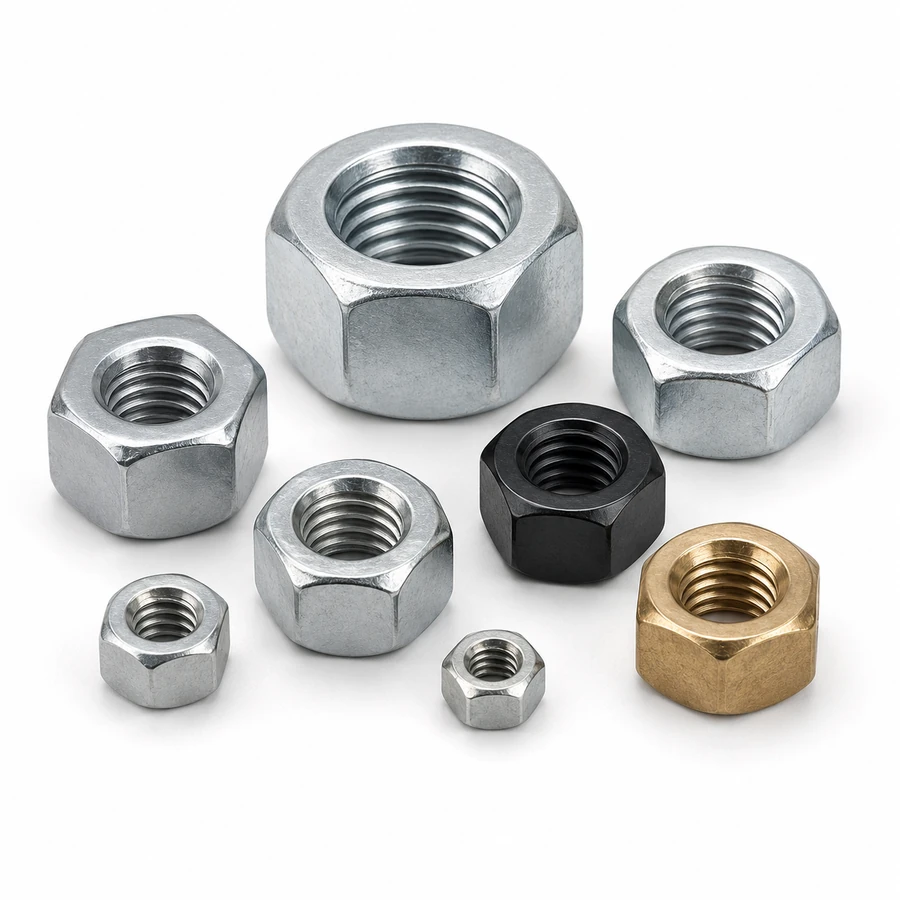
Representative lock nuts category image for China fastener sourcing

Product images are representative category references only. Final specifications should be confirmed by buyer drawings, standards, samples, or purchase lists.

Lock Nut Types and Locking Methods

Use this table as a starting point for RFQ preparation. Different lock nut types use different locking methods and are not interchangeable solely because the thread size appears similar.

Lock Nut TypeLocking MethodTypical Application DirectionRFQ Detail to Confirm
Nylon insert prevailing torque nutsNon-metallic insert creates friction through compression against the bolt threadGeneral industrial and mechanical applications requiring prevailing torque lockingRegular, high or thin style; insert material; thread size; property class; application temperature; chemical exposure; reuse requirement
All-metal prevailing torque nutsMetal deformation or locking structure creates prevailing torque without a non-metallic elementApplications where non-metallic insert is not suitable or where an all-metal design is specifiedSpecific product design; applicable standard; thread size; property class; temperature; reuse requirement
Top-lock or distorted-thread nutsThread deformation at the top or a specified thread zone creates prevailing torqueBuyer-specified industrial applications where top-lock design is requiredProduct dimensions; thread deformation design; standard reference; material; performance requirement
Prevailing torque flange nutsCombined prevailing torque locking feature with an integral flange bearing surfaceApplications where both prevailing torque and a larger bearing surface are requiredFlange form; locking method; nut style; standard; material; finish; mating surface condition
Serrated flange nutsSerrations on the flange bearing surface mechanically engage the mating surfaceApplications where serrations are permitted on the mating surfaceSerration direction; mating surface condition; surface damage restrictions; material; finish
Thin nylon insert lock nutsNon-metallic insert with reduced nut heightSpace-constrained applications where reduced nut height is requiredStrength; thread engagement; height; property class; applicable standard
Slotted or castellated nutsPositive locking through cotter pin or other mechanical locking device through nut slotsApplications where positive mechanical locking is specified per buyer designNut dimensions; slot dimensions; cotter pin size; applicable standard
Jam nuts and double-nut arrangementsLocking achieved through friction between two nuts in a double-nut assemblyPosition locking where a double-nut arrangement is designed per project specificationNut height; installation method; torque specification; applicable application design
Custom lock nuts made to drawingPer buyer drawing, sample or project specificationNon-standard locking nut design or special performance requirementDrawing; BOM; material; locking method; coating; performance test; inspection requirements

Important: Different lock nut types use different locking principles. Products cannot be identified from a product photo alone. Locking performance must be confirmed with the applicable standard, mating fastener and buyer application conditions.

Common Standards Reference

The following standards are commonly referenced in buyer RFQs and sourcing documents for prevailing torque lock nuts. This is a buyer reference framework only — not a final compliance statement. Standard versions, full scope and exact requirements should be confirmed during manual RFQ review. Buyers should confirm which standard, version and product details apply to their specific requirements. Detailed standard editions, dimensional requirements, performance criteria and product applicability are verified against available technical documentation during manual RFQ review.

StandardCommon Product ScopeBuyer RFQ UseImportant Limitation
ISO 7040Prevailing torque hexagon nuts with non-metallic insert — commonly referenced in buyer RFQs for metric coarse thread applicationsSubject to confirmation during manual RFQ review — typically referenced for regular nut height range with non-metallic insert lockingBuyers should confirm the exact standard version, applicable nut style (regular, high or thin) and thread requirements.
ISO 7041Prevailing torque hexagon nuts with non-metallic insert — commonly referenced in buyer RFQs for higher-height metric coarse thread applicationsSubject to confirmation during manual RFQ review — referenced for high-nut form where specifiedBuyers should confirm the exact nut height range and whether regular or high nut form applies.
ISO 7042Prevailing torque hexagon nuts, all-metal construction — commonly referenced in buyer RFQs for metric coarse thread applicationsSubject to confirmation during manual RFQ review — applicable where all-metal locking is specified by the buyerNot interchangeable with nylon insert lock nuts without reviewing the applicable standard and performance requirements.
ISO 7719Prevailing torque hexagon nuts, all-metal construction — commonly referenced in buyer RFQs for metric coarse thread regular-nut applicationsSubject to confirmation during manual RFQ review — referenced where all-metal regular nut form is specifiedBuyers should confirm nut height range and whether regular or high nut form applies, per the applicable standard.
ISO 7720Prevailing torque hexagon nuts, all-metal construction with slot features — commonly referenced in buyer RFQsSubject to confirmation during manual RFQ review — slot feature distinguishes this from non-slotted all-metal lock nutsBuyers should confirm slot feature details per the applicable standard and distinguish from castellated nut designs.
ISO 10511Prevailing torque thin hexagon nuts with non-metallic insert — commonly referenced in buyer RFQsSubject to confirmation during manual RFQ review — referenced for reduced-height applications where space is limitedReduced nut height. Not interchangeable with regular or high nut designs without reviewing the application requirements.
ISO 10512Prevailing torque hexagon nuts with non-metallic insert for metric fine pitch thread — commonly referenced in buyer RFQsSubject to confirmation during manual RFQ review — applicable where fine metric thread pitch is specified by the buyerFine pitch only. Coarse and fine threads are not interchangeable.
ISO 10513Prevailing torque hexagon nuts, all-metal construction for metric fine pitch thread — commonly referenced in buyer RFQsSubject to confirmation during manual RFQ review — applicable where all-metal fine-pitch locking nuts are specifiedFine pitch only. Must confirm specific thread pitch and applicable standard details.
ISO 2320Functional performance and testing reference for prevailing torque steel nuts — commonly referenced in buyer RFQsSubject to confirmation during manual RFQ review — referenced for prevailing torque and torque/clamp force test method requirementsDoes not specify a fixed torque value. Performance must be confirmed per applicable standard, product specification and test conditions.
ASME B18.16.6Inch prevailing torque locknuts — dimensional, mechanical and performance requirementsWhen inch-series prevailing torque locknuts are referenced per ASMEApplies to inch thread only. Not interchangeable with metric products.
ASME B18.16MMetric prevailing-torque hex nuts and flange nuts — dimensional and performance requirementsWhen metric-series prevailing torque nuts are referenced per ASMEASME metric products are not automatically identical to ISO metric products in all requirements.
DIN 985 / DIN 982 / DIN 980Legacy DIN numbers still found in buyer RFQs and drawingsAs buyer reference to current ISO equivalents where applicableBuyers should confirm the specific version, dimensions, property class and performance requirements. Legacy DIN and current ISO are not automatically identical in all details.

Important: Lock nut standards are not interchangeable solely because the thread size and general appearance are similar. Nut style, height, locking method, material, property class, thread pitch and performance requirements must be confirmed.

Functional Performance and Application Considerations

Lock nut performance depends on multiple factors. The following parameters should be reviewed together with the applicable standard and buyer requirements.

  • Prevailing torque at first installation
  • Prevailing torque after specified removal cycles
  • Removal torque
  • Reuse requirement
  • Number of reuse cycles if specified
  • Proof load or nut mechanical requirements
  • Thread fit
  • Bolt surface condition
  • Nut surface condition
  • Lubrication
  • Temperature exposure
  • Chemical exposure
  • Vibration
  • Dynamic loading
  • Installation speed
  • Installation tool
  • Tightening method
  • Clamp force requirement
  • Inspection or test method

Important considerations:

  1. Prevailing torque is not the same as final tightening torque.
  2. Locking performance cannot be determined from the colour of a nylon insert alone.
  3. Non-metallic insert suitability must be reviewed together with temperature and chemical exposure conditions.
  4. All-metal lock nuts are not automatically suitable for every high-temperature environment.
  5. Reuse capability must be confirmed according to the applicable standard, test requirements and buyer documentation.
  6. No fixed torque value, fixed temperature range or fixed reuse count can be provided without project-specific information.
  7. Website content cannot substitute for the buyer's engineering verification and assembly testing.

Materials, Inserts and Surface Finish Directions

Material, property class, locking element, coating, mating bolt and service environment should be reviewed together.

Material / FinishTypical DirectionRFQ Detail to ConfirmImportant Limitation
Carbon steelGeneral mechanical and industrial assembly applicationsProperty class, finish, thread fit, locking performance requirementPlain finish carbon steel may have limited corrosion resistance.
Alloy steelApplications with specific mechanical property requirementsProperty class, heat treatment requirement, coating, test requirementsMechanical properties depend on exact standard and processing.
Stainless steel A2 / 304General corrosion-resistant applicationsGrade, property class, insert material compatibility, surface conditionNot automatically suitable for every corrosive environment.
Stainless steel A4 / 316Higher corrosion resistance applicationsGrade, property class, locking method, temperature capabilityHigher material cost and different mechanical properties from carbon steel.
Nylon or buyer-specified non-metallic insertPrevailing torque locking for general industrial applicationsInsert material; temperature exposure; chemical exposure; colour requirement where applicable; performance standardInsert material colour is not a reliable indicator of material grade or performance capability.
Plain / black finishBuyer-specified industrial applicationsFinish specification, corrosion resistance requirement, thread fitNot a high-corrosion-resistance finish. Confirm against project requirement.
Zinc platedGeneral industrial applications with basic corrosion resistanceCoating colour, thickness, thread fit, nut bore allowance, prevailing torque after coatingCoating thickness affects thread fit and prevailing torque. Must be confirmed together.
Hot-dip galvanizedOnly where applicable standard and nut design permitNut dimensions, oversize tapping if required, mating bolt coating, thread fit, locking performance, applicable standardNot all lock nut types or designs are suitable for hot-dip galvanizing. Must be reviewed per applicable standard.
Zinc flake or buyer-specified coatingPer buyer project specification where applicableCoating system, friction requirement, locking performance test, applicable standardCoating system compatibility depends on nut design and locking method.
Buyer-specified special material or coatingPer buyer project documentsMaterial, coating, locking method, test requirements, applicable standardMust be confirmed per buyer specification.

Important: Material, property class, locking element, coating, mating bolt and service environment should be reviewed together. No salt spray hours, outdoor service life, fixed friction coefficient, fixed insert temperature rating, coating brand or unverified chemical resistance data can be provided without project-specific information.

Bolt Compatibility and Assembly Considerations

A lock nut cannot be confirmed independently from its mating bolt. Compatibility must be reviewed together.

  • Mating bolt standard
  • Bolt property class or grade
  • Metric or inch thread
  • Thread diameter
  • Thread pitch or TPI
  • Thread tolerance
  • Bolt finish
  • Nut finish
  • Coating allowance
  • Thread engagement
  • Available bolt projection
  • Washer requirement
  • Bearing surface
  • Flange or serration requirement
  • Installation direction
  • Tightening tool
  • Installation torque specification
  • Reuse policy
  • Mixed assembly traceability

Important:

  1. A lock nut cannot be confirmed independently from its mating bolt. Bolt grade, finish and coating affect locking performance.
  2. Metric and inch threads cannot be mixed.
  3. Coarse and fine threads cannot be mixed.
  4. Coating may affect thread fit and prevailing torque performance.
  5. Nut property class should match the mating bolt grade and application requirements.
  6. Serrated flange nuts require confirmation that the mating surface can accept serration marks.
  7. Nylon insert lock nuts require sufficient effective thread engagement per the applicable standard or buyer requirement.
  8. No fixed installation torque can be provided without the applicable assembly specification.

Lock Nuts RFQ Checklist

Use this checklist when preparing a lock nut RFQ. Different types, thread sizes, pitches, styles, materials or finishes must be separated into individual SKU lines.

  • Lock nut type
  • Locking method
  • Original buyer specification before conversion
  • Applicable standard
  • Legacy DIN reference where applicable
  • Metric or inch thread
  • Diameter
  • Thread pitch or TPI
  • Regular, high or thin style
  • Flange requirement
  • Serration requirement
  • Material
  • Property class or grade
  • Stainless steel grade
  • Insert material
  • Insert colour if required
  • All-metal locking design
  • Surface finish
  • Coating specification
  • Mating bolt standard
  • Mating bolt grade
  • Mating bolt finish
  • Thread tolerance
  • Temperature exposure
  • Chemical exposure
  • Vibration or dynamic application
  • Reuse requirement
  • Prevailing torque test requirement
  • Proof load requirement
  • Quantity by SKU
  • Packing quantity
  • Carton and pallet requirements
  • Label requirements
  • Batch traceability
  • Inspection documents
  • Destination country or port
  • Drawing, BOM, sample or project specification

Common Procurement Mistakes

  • Calling every anti-loosening nut a "lock nut".
  • Treating nylon insert nuts and all-metal lock nuts as interchangeable.
  • Identifying a lock nut only from a photograph.
  • Quoting only thread diameter.
  • Forgetting thread pitch or TPI.
  • Mixing metric and inch threads.
  • Mixing coarse and fine threads.
  • Ignoring regular, high and thin nut styles.
  • Assuming all nylon inserts have the same material and temperature capability.
  • Selecting products only by insert colour.
  • Assuming all-metal lock nuts are suitable for every high-temperature application.
  • Ignoring bolt grade and nut property class compatibility.
  • Ignoring coating effects on thread fit and prevailing torque.
  • Assuming every lock nut can be reused repeatedly.
  • Confusing prevailing torque with final tightening torque.
  • Treating serrated flange nuts as identical to prevailing-torque nuts.
  • Treating castellated nuts as prevailing-torque nuts.
  • Using thin jam nuts as a direct substitute for engineered locking nuts.
  • Approving production only from a representative image.
  • Requesting performance tests or inspection documents only after production.

Product-Level FAQ

Short answers for buyers preparing lock nut RFQs.

What is a prevailing torque lock nut?

A prevailing torque lock nut is a nut designed to resist loosening through friction generated by a locking feature. The locking feature may be a non-metallic insert or an all-metal deformed thread section. The prevailing torque is the friction torque present before the nut contacts the bearing surface.

What is the difference between a nylon insert lock nut and an all-metal lock nut?

A nylon insert lock nut uses a non-metallic collar at the top to create prevailing torque friction. An all-metal lock nut relies on controlled thread deformation or a mechanical locking feature in the metal nut body. They are not interchangeable. Selection depends on the applicable standard, temperature, chemical exposure, and reuse requirements.

What is the difference between a regular, high and thin lock nut?

Regular, high and thin lock nuts have different nut heights. A regular nut has a standard height range. A high nut has increased height for greater thread engagement. A thin nut has reduced height and is used where space is limited. They are not interchangeable for the same application.

What information should buyers provide for a lock nut RFQ?

Buyers should provide lock nut type, locking method, applicable standard, metric or inch thread, diameter, thread pitch or TPI, regular or high or thin style, material, property class, insert type if applicable, surface finish, mating bolt standard and grade, temperature and chemical exposure, reuse requirements, quantity, packing and inspection documents.

Can nylon insert lock nuts be used at high temperatures?

Nylon inserts have temperature limitations. The specific material, application temperature and performance requirements must be confirmed. All-metal lock nuts may be considered for higher temperature applications, but suitability depends on the exact grade, standard and application conditions.

Are all-metal lock nuts suitable for every high-temperature application?

No. All-metal lock nuts are not automatically suitable for every high-temperature application. The exact material, locking design, applicable standard and service conditions must be confirmed. General claims about high-temperature capability cannot substitute for project-specific verification.

Can lock nuts be reused?

Reuse depends on the nut type, applicable standard, and the buyer's specific reuse requirements. Not all lock nuts are designed for reuse. Prevailing torque performance after repeated use should be confirmed against the applicable test standard.

What is the difference between prevailing torque and installation torque?

Prevailing torque is the friction torque generated by the locking feature before the nut contacts the bearing surface. Installation torque (tightening torque) is the total torque applied to achieve clamp force, which includes prevailing torque plus bearing surface friction. They are not the same parameter.

Why must the mating bolt grade and finish be confirmed?

Lock nut performance depends on the mating bolt. The bolt grade, surface finish, coating, thread tolerance and hardness all affect the prevailing torque and locking behaviour. A lock nut tested on one bolt condition may not perform identically on another.

Can metric and inch lock nuts be substituted?

No. Metric and inch thread systems are different. Thread diameter, pitch and thread form are not interchangeable.

Can coarse-thread and fine-thread lock nuts be substituted?

No. Coarse and fine threads have different pitches, depths and strength characteristics. They are not interchangeable.

Are DIN 985 and ISO 7040 automatically identical?

DIN 985 and ISO 7040 are related but may have differences in dimensions, material requirements and performance specifications. Buyers should confirm the applicable standard, version, dimensions and requirements for their specific product.

What is the difference between a serrated flange nut and a prevailing-torque flange nut?

A serrated flange nut has serrations on the flange bearing surface designed to resist loosening through mechanical engagement with the mating surface. A prevailing-torque flange nut has a prevailing torque locking feature in the nut body. They use different locking principles and are not automatically interchangeable.

Is a castellated nut a prevailing-torque lock nut?

No. A castellated nut achieves positive locking through a cotter pin or other mechanical locking device inserted through slots in the nut. It is not a prevailing-torque lock nut. The locking principle and application requirements are different.

Can nylon insert and all-metal lock nuts be included in one mixed order?

Yes. Mixed orders can be reviewed manually when type, locking method, thread size, style, material, grade, finish, quantity, packing and inspection requirements are clear for each product type.

What inspection documents or performance tests can be discussed?

Depending on the item and buyer requirements, documents may include dimensional reports, material test certificates, coating thickness reports, prevailing torque test reports, proof load test reports, and pre-shipment photos.

What affects the lead time for a mixed lock nut order?

Lead time depends on material availability, nut type, locking element type, heat treatment if applicable, coating, quantity, packing requirements and inspection requirements. Final lead time is confirmed after RFQ review.

<
Can you review an RFQ that uses inch dimensions and convert it to metric references?

Yes. Reference conversions can be provided, but metric and inch products are not automatically interchangeable. The original thread system, pitch or TPI, dimensions, grade, matching components and applicable standard must remain part of the RFQ review.

/div>

Related Sourcing Links

Use these pages with the lock nut reference when preparing a buyer RFQ or mixed fastener list.

Send Lock Nut RFQ for Manual Review

Share product type, standard, dimensions, thread, material, finish, matching bolt requirements, reuse expectations, packing, and inspection document needs for manual review.

Send RFQ